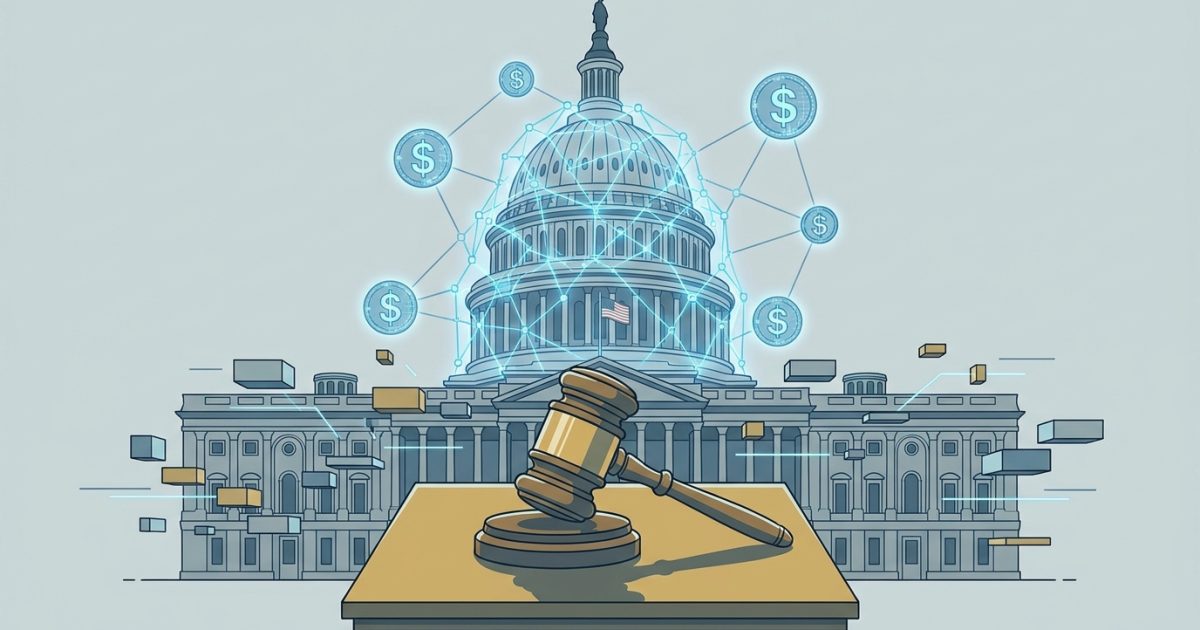

US crypto regulation moved faster this week than at any point in the past two years. Senators Thom Tillis and Angela Alsobrooks reached a bipartisan compromise on the most contested provision in the Digital Asset Market CLARITY Act – stablecoin yield – removing what industry observers had called the final major roadblock to the legislation’s advance.
The news lifted crypto stocks and Bitcoin simultaneously. Circle, the issuer of USDC, led sharp gains. Coinbase and other digital asset firms followed. Bitcoin briefly topped $80,000 as investors priced in the prospect of regulatory clarity arriving within months rather than years.
Senate Banking Committee Chairman Tim Scott confirmed the bill is now targeting a formal markup in May 2026.
What the Compromise Actually Says
The sticking point had been whether stablecoin issuers could offer yield – ly, interest – to holders of their tokens. Banks lobbied hard to prohibit this, arguing it would give crypto firms an unfair competitive advantage in attracting deposits. Crypto industry participants argued that banning all yield would cripple legitimate business models.
The Tillis-Alsobrooks compromise threads that needle by drawing a distinction between two types of yield.
Prohibited: yield that’s an interest rate equivalent to a bank deposit. If a stablecoin issuer is effectively acting like a bank and paying interest on customer balances, that falls under the prohibition.
Permitted: “bona fide activities” – yield that arises from legitimate crypto business operations such as staking, liquidity provision, or DeFi protocol participation. Crypto firms can continue pursuing reward programs that are structurally different from bank-style interest.
“We commend Senators Tillis and Alsobrooks for their leadership in reaching this important compromise,” a coalition of crypto industry groups said in a joint statement. The Blockchain Association, Crypto Council for New idea, and multiple stablecoin-focused firms all backed the deal.
Why This Matters Beyond Stablecoins
The CLARITY Act isn’t solely a stablecoin bill. it’s a complete attempt to define which digital assets fall under SEC jurisdiction versus CFTC oversight – a distinction that has created enormous regulatory uncertainty for the industry since 2022.
The stablecoin yield provision was the last major unresolved issue. With it addressed, the bill can now proceed to markup, where it’ll be formally debated and amended in committee before advancing to a full Senate floor vote.
That floor vote will require 60 votes to overcome a filibuster – a threshold that demands genuine bipartisan support. The fact that a Democrat (Alsobrooks) and a Republican (Tillis) sponsored the compromise is an encouraging signal, but 60 votes is never easy on contentious financial legislation.
Even after Senate passage, the bill must be reconciled with competing House legislation and survive conference negotiations. The road to becoming law is still long.
Market Impact Has Been Significant
The announcement landed on May 1-2, overlapping with Bitcoin’s move back above $80,000. Analysts at Disruption Banking described it as “fueling a massive rally” across the crypto sector, with the correlation between regulatory progress and price performance unusually clear.
Circle’s stock jumped sharply. Coinbase gained. USDC’s market cap held steady while Tether continued its own regulatory upgrade trajectory – the stablecoin giant announced a KPMG audit of its $184 billion in reserves in the same week, adding a separate layer of confidence to the stablecoin sector overall.
For traditional financial institutions sitting on the sidelines of crypto, clarity on whether they can legally integrate stablecoin products is a precondition for participation. The CLARITY Act compromise removes a major source of that uncertainty.
What the Industry Is Watching
The Senate Banking Committee markup is the immediate next milestone. If it proceeds in May as targeted, the bill advances to the full Senate, likely sometime over summer 2026.
The 60-vote filibuster threshold remains the hardest obstacle. Crypto-friendly Democrats have been growing in number – Senator Alsobrooks’ sponsorship of the compromise is evidence of that – but unified Republican support, which Chairman Scott said is required before advancing, isn’t guaranteed in a Senate where party discipline on financial regulation often breaks down.
The reconciliation process with the House adds another layer. House Republicans passed their own market structure system earlier in 2026, and the two chambers will need to agree on a unified text.
Industry groups are also watching how the SEC and CFTC respond to the bill’s advances. Both agencies have territorial interests in digital asset oversight, and agency-level resistance – through rulemaking or interpretive guidance – could complicate implementation even after legislation passes.
FAQ
what’s the CLARITY Act and why does it matter for crypto? The Digital Asset Market CLARITY Act is a US Senate bill that defines which cryptocurrencies fall under SEC oversight versus CFTC oversight, addresses stablecoin issuance rules, and provides a system for broader digital asset market regulation. it’s the most significant piece of US crypto legislation to advance since the infrastructure bill in 2021.
What did the Tillis-Alsobrooks CLARITY Act compromise change? Senators Tillis and Alsobrooks resolved the contested stablecoin yield provision by prohibiting yield that functions like bank deposit interest while allowing crypto firms to continue offering rewards from legitimate activities like staking and liquidity provision. This compromise cleared the bill’s final major roadblock.
When will the CLARITY Act become law? A Senate Banking Committee markup is targeted for May 2026. After that, a full Senate floor vote requiring 60 votes and reconciliation with House legislation remain. Most analysts expect the earliest possible enactment to be late 2026 at the optimistic end, with 2027 considered more realistic given the procedural requirements.
—
Sources: CoinDesk, Forbes, Disruption Banking, Lexology, CNBC