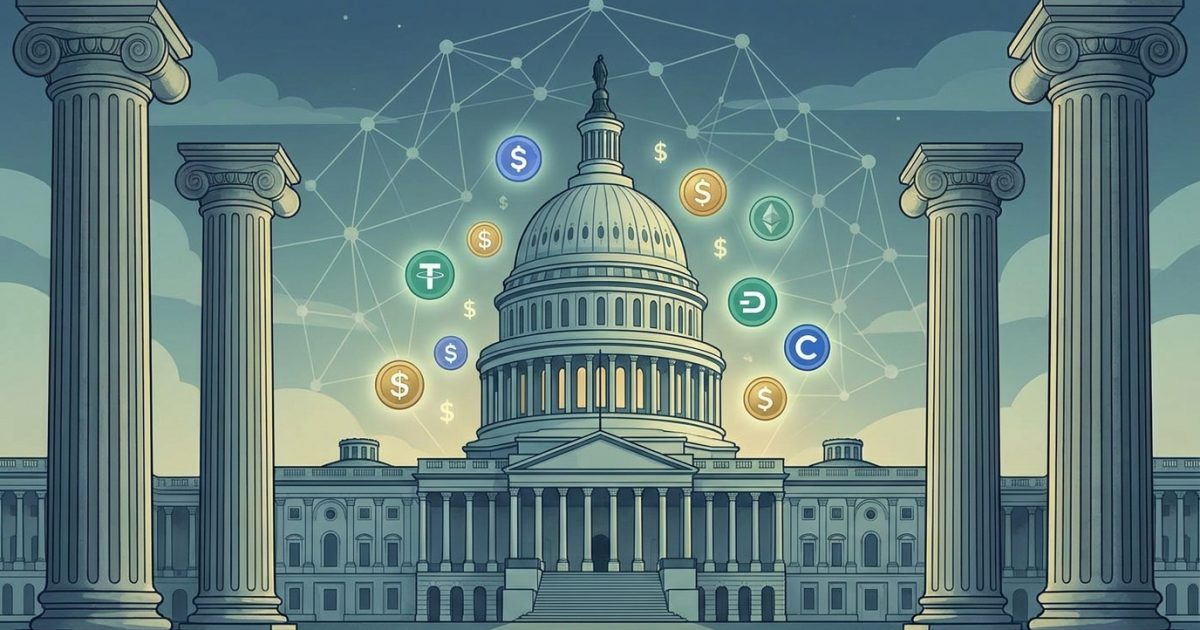

Major US banking institutions have formally requested that the Treasury Department pause implementation of the GENIUS Act’s stablecoin system, raising concerns that the July 2026 deadline doesn’t give them adequate time to adapt compliance systems to the new regulatory requirements.
The GENIUS Act – short for Guiding and Establishing National Innovation for US Stablecoins – passed the Senate Banking Committee earlier in 2026 and represents the most significant federal stablecoin legislation in American history. But the banking lobby’s intervention signals that even supporters of the broader system have reservations about the implementation timeline.
What the Banks Are Asking For
The request from the banking associations asks the Treasury Secretary to delay specific rule-making deadlines under the GENIUS Act by at least 90 days. Their argument rests on a practical concern: the Act mandates that federal banking agencies issue setting up regulations within 180 days of its effective date, but banks say their internal compliance infrastructure – from AML screening to reserve reporting systems – won’t be ready in time.
“The timeline underestimates the complexity of adapting core banking systems to handle regulated stablecoin operations,” one filing stated, according to sources familiar with the matter. “A rushed implementation risks creating compliance gaps that defeat the very purpose of the legislation.”
The Treasury hasn’t publicly responded to the request.
What the GENIUS Act Actually Does
For those unfamiliar with the legislation, the GENIUS Act establishes the first complete federal system for payment stablecoins – digital assets pegged to the US dollar and used for payments and transfers.
Key provisions include:
Reserve requirements. Stablecoin issuers must maintain 100% reserves in US dollars, short-term Treasuries, or similarly liquid instruments. This directly addresses concerns about under-collateralised stablecoins like the failed TerraUSD.
Federal vs state tracks. Issuers can choose to obtain a federal charter or operate under approved state frameworks. The Act coordinates oversight between Treasury, the Federal Reserve, OCC, and FDIC.
Foreign issuers. Non-US stablecoin issuers can serve American users if they meet Treasury-determined equivalency standards – a provision that affects USDT (Tether) and other offshore stablecoins significantly.
Bank participation. Federally chartered banks can issue payment stablecoins. This is the provision most relevant to the banking lobby’s concerns, as it means banks must build the technical and compliance infrastructure to issue or support stablecoin products.
Why Banks Are Nervous Despite Supporting the System
It may seem contradictory for banks to support stablecoin regulation while simultaneously asking for delays. But the dynamics make sense when you examine what compliance actually requires.
A bank issuing or supporting a stablecoin needs real-time reserve management systems, 24/7 transaction monitoring (blockchain never sleeps), integration with existing AML/KYC pipelines, and new reporting formats for regulators. These are non-trivial engineering and compliance projects.
The concern is also competitive. If smaller fintech-type stablecoin issuers – who have been building crypto-native infrastructure for years – are ready to go live under the new system while traditional banks are still building, the banks lose first-mover advantage in what could become a critical payments market.
The Broader Stakes: Stablecoin Market Is Already Massive
To understand why this matters, consider the scale. The combined market cap of USD-pegged stablecoins exceeded $200 billion by early 2026, with Tether’s USDT and Circle’s USDC dominating. Daily stablecoin transfer volumes routinely exceed the transaction volume of legacy payment networks.
If the GENIUS Act passes in its current form, it effectively brings this entire market under federal supervision – and potentially forces Tether to either comply with US rules or exit the US market. That’s a significant geopolitical and financial shift.
Banks see stablecoins as potentially disrupting their role in domestic payments. Rather than fight the technology, the major institutions are now trying to position themselves to issue competing regulated stablecoins – which is precisely why the GENIUS Act was designed with bank participation in mind.
Senator Tillis and the May Markup Hearing
Adding urgency to the timeline debate: Senator Thom Tillis has pushed for a May markup hearing on the CLARITY Act, which addresses the broader question of crypto asset classification. The CLARITY Act and GENIUS Act together form the backbone of Washington’s crypto regulatory agenda.
If the markup proceeds on schedule, and if the GENIUS Act moves toward a floor vote, the July deadline begins to look more fixed than negotiable. Banks that don’t have systems ready risk being locked out of a product category that their fintech competitors are already building toward.
Industry Reaction
The crypto industry’s response has been divided. Crypto-native companies that have spent years building compliant infrastructure largely welcome the GENIUS Act and are skeptical of the banks’ delay request, viewing it as incumbents trying to slow competition.
Circle, the issuer of USDC, has been publicly supportive of the GENIUS Act system, having designed its compliance architecture to meet exactly the kind of requirements the Act codifies. A delay would actually benefit newer entrants who need more time, while potentially annoying established stablecoin operators who are already compliant-adjacent.
The coming weeks will test whether Treasury treats the banks’ request as a legitimate technical concern or as regulatory arbitrage from institutions slow to adapt to digital finance.
FAQ
Q: What’s the GENIUS Act and why does it matter?
The GENIUS Act is the first complete US federal system for payment stablecoins. It establishes reserve requirements, supervision structures, and rules for both US and foreign stablecoin issuers, bringing a $200B+ market under regulatory oversight.
Q: Why are banks asking for a delay if they support stablecoin regulation?
Banks support the system in principle but say the July 2026 implementation deadline doesn’t give them enough time to rebuild compliance systems for stablecoin operations. They’re requesting at least a 90-day extension.
Q: How does the GENIUS Act affect Tether and USDC?
Foreign issuers like Tether must meet Treasury-determined equivalency standards to serve US customers. Circle’s USDC is built around US regulatory compliance and is well-positioned under the Act’s system.