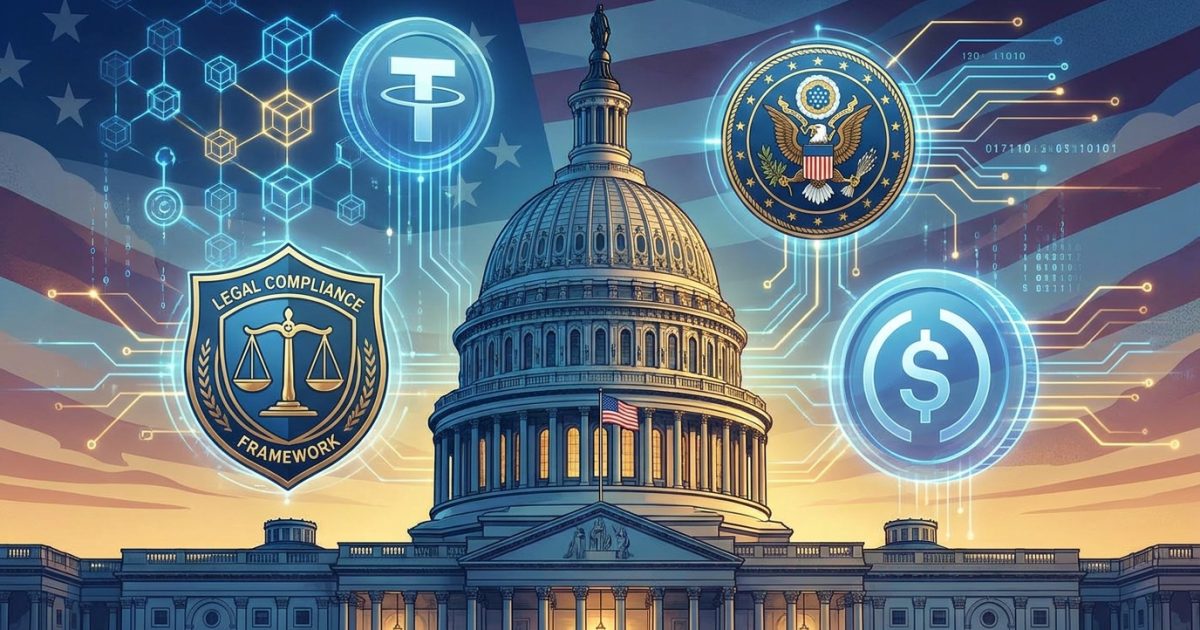

The U.S. Treasury Department’s public comment window on its proposed rulemaking under the GENIUS Act officially closed on May 18, 2026 — bringing to an end one of the most contentious regulatory consultation periods in recent crypto history. The rules, which would impose Bank Secrecy Act obligations on stablecoin issuers, have attracted fierce resistance from the industry while drawing support from anti-money laundering advocates who argue stablecoins represent a significant vector for illicit finance.
What the GENIUS Act Requires
The Guiding and Establishing National Innovation for U.S. Stablecoins Act — passed by the Senate with a strong 68-30 bipartisan vote in 2025 — established the first comprehensive regulatory framework for payment stablecoins in the United States. The law directs Treasury to treat permitted payment stablecoin issuers (PPSIs) as financial institutions under the Bank Secrecy Act, imposing the same anti-money laundering and know-your-customer requirements that apply to banks and money transmitters.
Under the proposed Treasury rule:
– Stablecoin issuers must implement AML/KYC programs meeting BSA financial institution standards
– Issuers must file Suspicious Activity Reports (SARs) for transactions triggering thresholds
– Foreign stablecoin issuers serving U.S. customers must comply or be barred from the market
– Transaction monitoring must be maintained across all on-chain activity involving the issuer’s tokens
Industry Response: Compliance Burden vs. Market Access
The crypto industry’s response to the rulemaking has been divided along predictable lines. Large, regulated stablecoin issuers like Circle — which already operates under New York’s BitLicense framework — have expressed cautious support, noting that the GENIUS Act framework legitimises stablecoins as a payment product and provides long-sought regulatory clarity.
Smaller issuers and DeFi protocols, however, have pushed back hard. A coalition of DeFi lobbying groups submitted comments arguing that applying BSA obligations to decentralized stablecoin systems is technically impossible and would effectively eliminate permissionless finance in the United States. They contend that smart contracts and AMMs cannot perform identity verification without fundamentally redesigning their architecture.
The Brookings Institution, in a widely cited analysis, identified four critical open issues Treasury must resolve: the treatment of algorithmic stablecoins, the interplay between stablecoin and tokenized bank deposit regulation, the question of jurisdictional reach over foreign issuers, and the definition of what constitutes “redemption” for regulatory purposes.
The Tether Problem
One of the most contentious issues raised in public comments is how the rules apply to Tether (USDT), the world’s largest stablecoin by market cap, which is issued by a British Virgin Islands-based company and has historically operated outside U.S. regulatory jurisdiction. Tether froze $514 million in USDT across 370 wallets in a single month as part of its voluntary compliance work — but critics argue voluntary freezes are no substitute for mandatory BSA compliance enforced by a primary regulator.
Foreign stablecoin provisions in the Treasury rule would require offshore issuers to register with a U.S. federal or state regulator to continue serving U.S. customers. If enforced rigorously, this could force Tether to choose between withdrawing from the U.S. market and accepting federal oversight — a decision with enormous implications for global crypto liquidity.
What Comes Next
Treasury will now review the comments received before the May 18 deadline and publish a final rule. The GENIUS Act itself gave Treasury six months from enactment to provide a rulemaking status update to the relevant congressional committees, meaning the final rules are expected by late 2026 at the earliest.
Meanwhile, the CLARITY Act — a companion bill addressing broader crypto market structure — cleared the Senate Banking Committee with a 15-9 vote on May 14, 2026, suggesting congressional momentum behind a comprehensive digital asset regulatory framework is building rapidly.
For stablecoin issuers, the clock is now ticking. Those who want to operate as permitted payment stablecoin issuers must begin preparing compliance infrastructure — regardless of whether the final Treasury rules are as strict as the proposed version.
What This Means for Crypto Users
The GENIUS Act framework primarily affects issuers, not individual stablecoin holders. However, end users will notice practical effects:
– Stricter identity requirements when purchasing, selling, or redeeming stablecoins through licensed platforms
– Potential withdrawal of non-compliant stablecoins from U.S.-regulated exchanges
– Greater transparency around stablecoin reserves and redemption guarantees
– Possible fragmentation between a compliant “onshore” stablecoin market and an offshore one
FAQ
What is the GENIUS Act?
The GENIUS Act (Guiding and Establishing National Innovation for U.S. Stablecoins Act) is U.S. legislation passed by the Senate in 2025 that creates the first federal regulatory framework for payment stablecoins, including AML/KYC requirements for issuers.
What happens after the public comment period closes?
Treasury will review all submitted comments and publish a final rule. The timeline for the final rule has not been specified, but the GENIUS Act requires Treasury to provide a rulemaking status update within six months of the act’s enactment.
Does the GENIUS Act affect DeFi stablecoins?
Yes — the proposed rules would apply to any entity that issues a payment stablecoin, including decentralized protocols operating in the U.S. market. The practical enforcement mechanism for fully decentralized systems remains an unresolved question that Treasury must address in the final rule.
Sources: U.S. Treasury Department, Congress.gov, Brookings Institution, CoinDesk, Reuters Practical Law, Chapman and Cutler