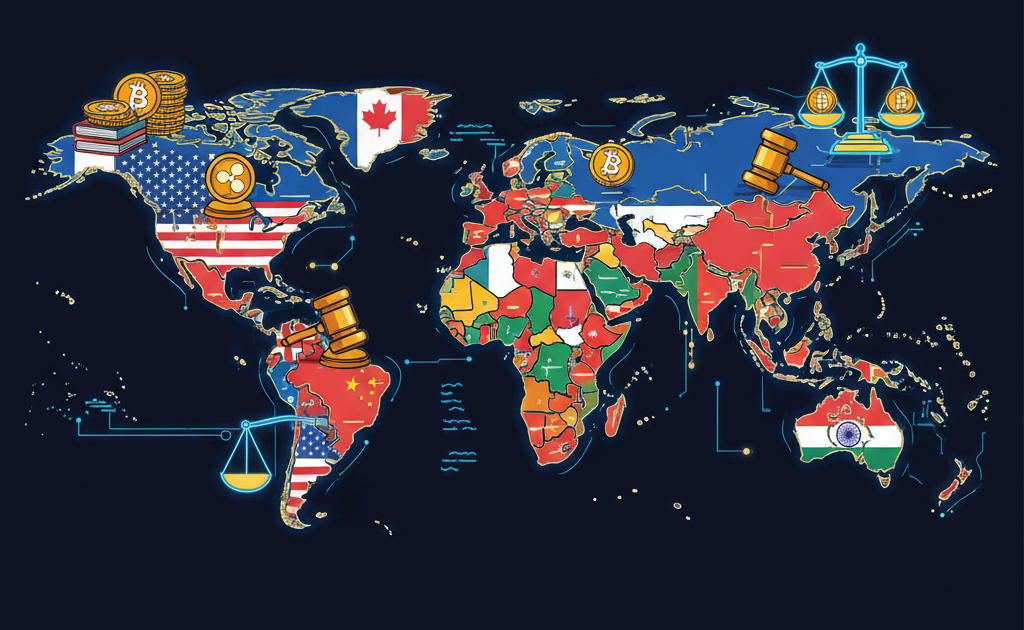

Crypto grew up in a regulatory grey zone. That era is ending.
In 2026, almost every major economy has either passed crypto legislation or has draft rules working through parliament. The Wild West period is over, and understanding the new rules is now essential for anyone involved in digital assets.
The European Union moved first with MiCA (Markets in Crypto-Assets), which came into full effect in December 2024. MiCA requires licensing for crypto exchanges and wallet providers, sets reserve requirements for stablecoins, and bans certain types of algorithmic stablecoins outright. So far, about 80 firms have obtained licenses under the system.
United States Regulation
The United States took a different path. Rather than passing comprehensive legislation, the SEC and CFTC have regulated through enforcement. The SEC treats most tokens as securities. The CFTC claims jurisdiction over crypto derivatives. A bipartisan stablecoin bill passed in late 2025, but broader market structure legislation is still being debated.
Asia presents a mixed picture. Japan has clear licensing rules and treats crypto exchanges as regulated financial institutions. Singapore tightened its rules after the Terra/Luna collapse. Hong Kong reopened to retail crypto trading in 2023 and has been aggressively courting Web3 firms. China maintains its ban on crypto trading but continues developing the digital yuan.
Europe and MiCA Implementation
The Middle East has emerged as a crypto hub. Dubai’s VARA (Virtual Assets Regulatory Authority) offers one of the most thorough frameworks globally. Abu Dhabi’s ADGM has attracted major exchanges. Saudi Arabia is reportedly developing its own system.
Tax enforcement is accelerating everywhere. The OECD’s Crypto-Asset Reporting System (CARF) requires exchanges to share transaction data across borders starting in 2027. Hiding crypto gains from tax authorities is getting much harder.
Asia-Pacific Approaches
For traders and builders, compliance is no longer optional. KYC, licensing, and tax reporting are table stakes. The projects that navigate regulation successfully will likely be the ones that survive the next decade.
CryptoGazette tracks regulatory developments worldwide – from new legislation and enforcement actions to licensing updates and compliance guidance.