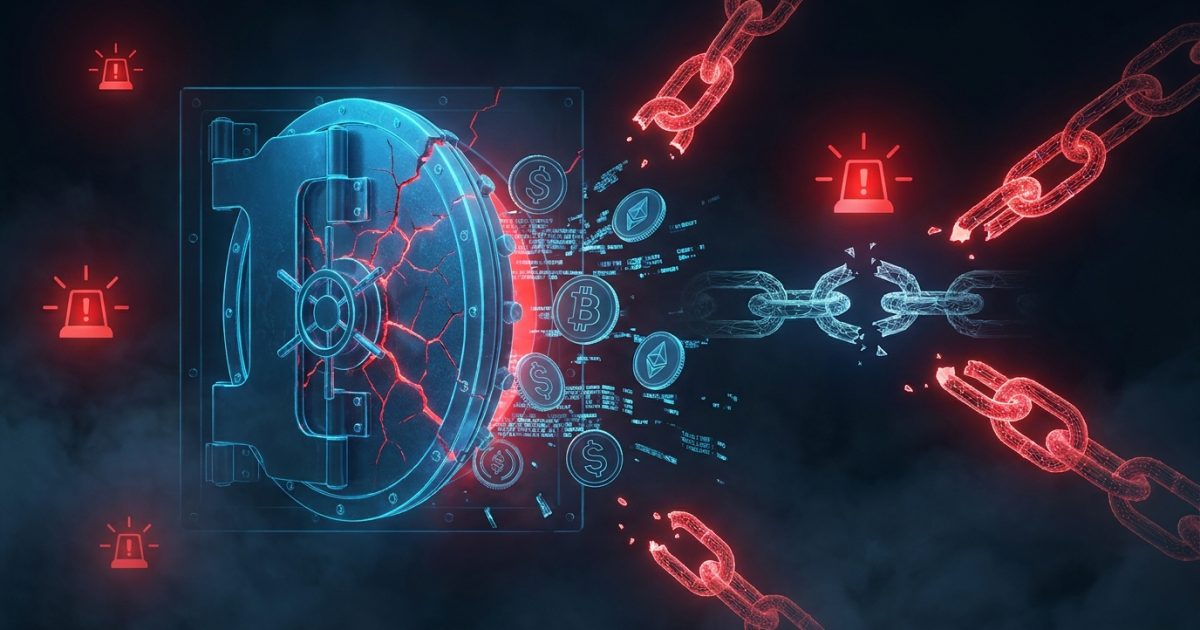

After the $292M Kelp DAO Hack, DeFi Asks the Hard Questions
Meta description: The $292M Kelp DAO exploit rattled crypto lending markets. DeFi insiders say it exposed structural weaknesses — but also believe it is a fixable problem. Here is what needs to change.
Focus keyword: Kelp DAO hack DeFi security 2026
—
The numbers keep going up. DeFi exploits crossed $750 million in the first four months of 2026 — and a single event, the $292 million Kelp DAO hack, accounts for almost 40% of that total. The attack rattled crypto lending markets, briefly spiked risk premiums across DeFi, and forced a public reckoning with the security assumptions the industry has been papering over.
But the conversation that followed was more mature than the one that typically follows a nine-figure exploit. This time, industry insiders did not just call for audits. They called for architecture changes.
What Happened at Kelp DAO
Kelp DAO operates as a restaking protocol, allowing users to deposit liquid staking tokens (LSTs) and earn additional yield by securing other networks through EigenLayer-compatible mechanisms. The exploit targeted a reentrancy vulnerability in the protocol’s withdrawal logic — a class of bug that should be extinct at this point in Ethereum’s development history, but keeps appearing in complex multi-layer restaking architectures.
The attacker drained approximately $292 million across multiple transactions before the protocol’s emergency pause was activated. On-chain analysis traced the funds through multiple mixer hops, with a portion believed to have moved through Tornado Cash successors operating on alternative chains.
The Carrot Protocol — a smaller DeFi lending platform that had significant Kelp DAO collateral positions — shut down permanently following the hack, with $285 million in user funds lost or unrecoverable.
Why One-Off Audits Are Not Enough
The Kelp DAO hack arrived with a fresh audit certificate. That is the part that should concern DeFi users most.
The protocol had completed a security audit within 90 days of the exploit. The auditing firm did not catch the reentrancy vulnerability. Whether that was due to audit scope, the complexity introduced by restaking logic, or a fundamental limitation of point-in-time audits is being debated — but the outcome is the same.
CoinDesk quoted multiple DeFi security researchers in its post-mortem analysis: the industry needs continuous monitoring, not snapshot audits. “A protocol’s attack surface changes every time it adds a new integration or upgrades a contract,” one researcher noted. “A 30-day-old audit is not a security guarantee — it is a historical document.”
The STRIDE security model — continuous, foundation-backed monitoring scaled to each protocol’s risk profile — has been gaining traction since the Drift Protocol hack in April. The argument is simple: protocols should pay for ongoing security the same way they pay for infrastructure — continuously, not once per cycle.
The $750M Year and What It Reveals
2026 is on track to be the third-worst year for DeFi exploits on record, with annualised losses approaching $2.5 billion if the current pace holds. Bridge exploits account for the largest share — cross-chain infrastructure remains the hardest target to secure because it combines smart contract risk with multi-chain consensus risk.
But the Kelp DAO hack was not a bridge exploit. It was a single-protocol reentrancy attack — the most well-understood vulnerability class in Ethereum development. The fact that it succeeded against a protocol with $292 million in TVL suggests that even mature DeFi categories have not solved their security fundamentals.
Forbes noted that the Drift Protocol hack earlier in April “exposed a gap decentralisation branding never acknowledged” — the idea that decentralisation protects users is marketing language that has no relationship to smart contract security.
The Institutional Adoption Question
Ironically, CoinDesk’s analysis found that the Kelp DAO hack is being treated by institutional investors as a “temporary setback rather than a fundamental barrier” to DeFi adoption. The reasoning is counterintuitive: large institutions did not have exposure to Kelp DAO precisely because they have security and custody requirements that immature DeFi protocols cannot meet.
For institutional capital to enter DeFi at scale, the industry needs:
– Continuous security monitoring with published results
– Insurance mechanisms that scale with TVL
– Formal verification of core contract logic, not just functional audits
– Multi-sig governance over emergency pause and upgrade functions
Several protocols have begun implementing these requirements voluntarily. The Kelp DAO hack will accelerate that trend, as it does for every major exploit that precedes it.
What DeFi Needs to Do Next
The technical fixes are known. Reentrancy guards have been standard since 2017. The problem is not the absence of solutions — it is the absence of enforcement. No one is requiring DeFi protocols to implement them.
That changes when regulators arrive. The CLARITY Act’s DeFi provisions — still being negotiated — could establish baseline security requirements for protocols above certain TVL thresholds. That is a significant overhang for the sector, because compliance will favour well-capitalised, security-mature protocols and squeeze out the long tail of underfunded projects that currently fill the exploit statistics.
The market is already pricing this dynamic. DeFi’s Fear and Greed Index sat in extreme fear territory despite $95 billion in TVL recovery — suggesting the market believes the hack pace is structural, not episodic.
The protocols that survive the next cycle will be the ones that treat security as infrastructure rather than marketing.
—
Frequently Asked Questions
How much was stolen in the Kelp DAO hack?
Approximately $292 million was drained through a reentrancy vulnerability in the protocol’s withdrawal logic. The Carrot Protocol, which had significant Kelp DAO collateral positions, subsequently shut down permanently, adding to the total damage from the incident.
Why do DeFi hacks keep happening despite audits?
Security audits are point-in-time reviews that do not capture vulnerabilities introduced by new integrations or upgrade logic added after the audit. The industry is shifting toward continuous security monitoring, but adoption is still voluntary and inconsistent.
Is it safe to use DeFi after the Kelp DAO hack?
Risk varies significantly by protocol. Established protocols with multi-sig controls, published continuous audits, on-chain insurance, and transparent governance carry meaningfully lower risk than newer or underfunded projects. Users should check a protocol’s security posture before depositing.
—
*Sources: CoinDesk, Forbes, phemex.com, The Block, Binance Square*