
Every blockchain faces the same fundamental problem: how do you process more transactions without sacrificing security or decentralization? Layer 1 and Layer 2 solutions represent two different approaches to this challenge.
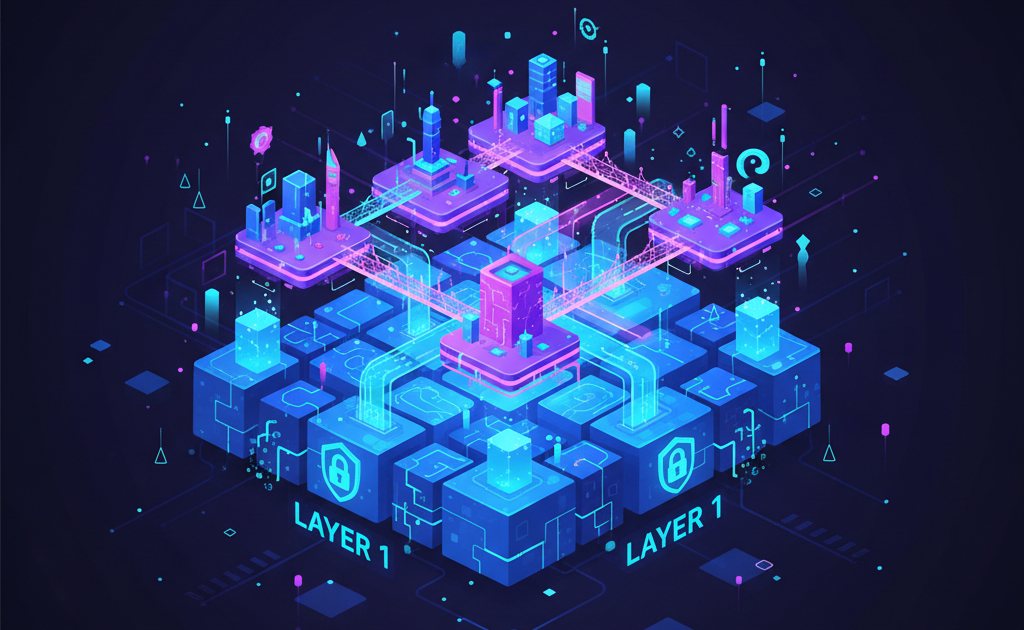
Layer 1 refers to the base blockchain itself – Bitcoin, Ethereum, Solana, Avalanche, and others. Each makes different tradeoffs. Bitcoin prioritizes security and decentralization over speed, processing about 7 transactions per second. Solana prioritizes speed, handling thousands of transactions per second but with a smaller validator set and occasional outages.
Ethereum chose a different strategy: keep the base layer secure and decentralized, then scale through Layer 2 networks built on top.
What Are Layer 1 Blockchains?
Layer 2s process transactions off the main chain and periodically post compressed proofs back to Layer 1. The two main types are optimistic rollups and zero-knowledge (ZK) rollups.
Optimistic rollups like Arbitrum and Optimism assume transactions are valid and allow a challenge period for disputes. They launched first and captured most early Layer 2 activity. Arbitrum alone processes more daily transactions than Ethereum mainnet.
How Layer 2 Solutions Work
ZK rollups like zkSync and StarkNet use cryptographic proofs to verify transactions mathematically. They’re more complex to build but offer faster finality and stronger security guarantees. The technology is maturing rapidly – ZK proofs that once took minutes now generate in seconds.
The result in 2026 is a multi-chain field. Ethereum’s Layer 2 system processes five times more transactions than the base layer. Cross-chain bridges move assets between networks, though bridge exploits remain one of the biggest security risks in crypto.
Key Differences and Trade-offs
Other Layer 1s compete by offering different specializations. Solana targets high-frequency trading and consumer applications. Avalanche offers customizable subnets for enterprise use. Cosmos lets developers launch application-specific blockchains that communicate through the IBC protocol. Near Protocol focuses on chain abstraction, hiding multi-chain complexity from end users.
The interoperability problem is far from solved. Each chain has its own wallet, its own tokens, and its own system of applications. Projects like LayerZero and Wormhole are building cross-chain messaging protocols, but a smooth multi-chain experience remains years away.
The Road Ahead
For developers, the choice of which chain to build on depends on the application. High-frequency trading needs speed – Solana or a dedicated Layer 2. DeFi protocols need deep liquidity – still mostly Ethereum and its major rollups. Gaming needs low fees – any Layer 2 or alt-L1 will do.
CryptoGazette covers Layer 1 and Layer 2 developments – from network upgrades and performance benchmarks to the scaling debates shaping the industry.