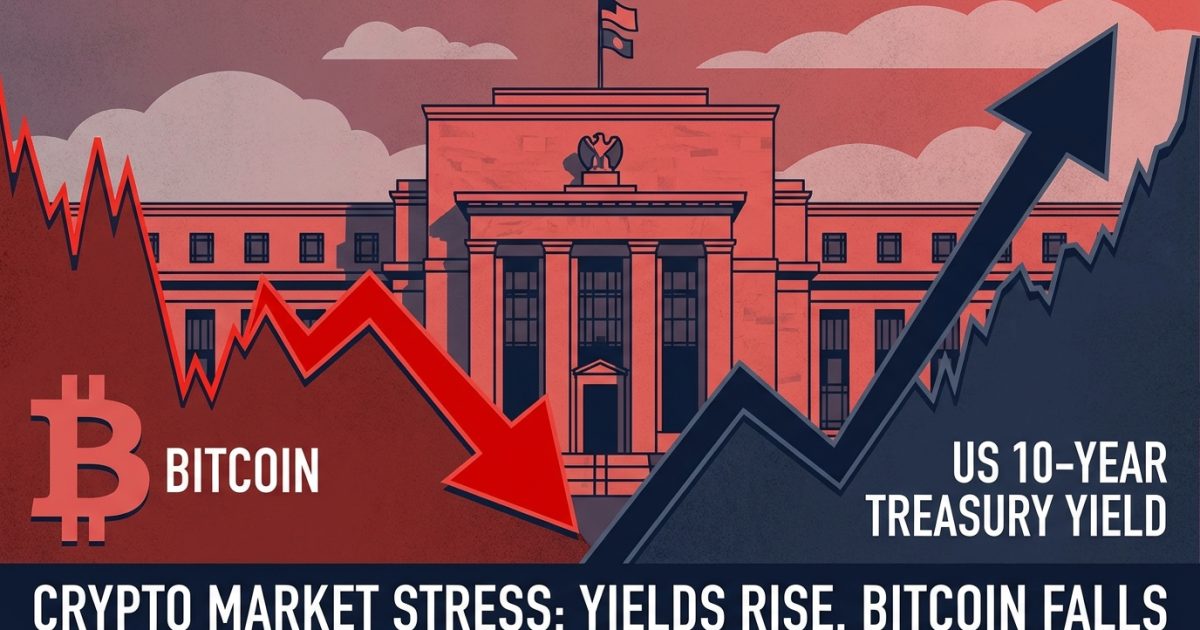

Meta description: Bitcoin fell below $79,000 on May 15 as US Treasury yields surged above 5%, inflation data came in hotter than expected, and traders repriced Fed rate cut expectations sharply lower.
Focus keyword: Bitcoin bond yields inflation 2026
Category: Markets (57)
Slug: bitcoin-below-79000-bond-yields-inflation-may-2026
—
Bitcoin dropped below $79,000 last Friday in a sharp risk-off move that swept across crypto, equities, and gold simultaneously, as surging US Treasury yields and a hotter-than-expected producer price index report forced traders to abandon positions across risk assets. The selloff put the world’s largest cryptocurrency below its 200-day moving average heading into the weekend — a technical threshold that analysts watch closely as a signal of broader market sentiment.
The move was not crypto-specific. The 30-year US Treasury yield has been trading above 5%, a level that historically applies significant pressure to non-yielding assets like Bitcoin. At that yield level, investors can earn 5% annually from government bonds with near-zero counterparty risk — a direct competitor to the speculative return profile of digital assets.
The Macro Setup That Spooked Markets
Friday’s selloff was triggered by a combination of factors that converged over a 48-hour window:
PPI data: The US Producer Price Index came in higher than forecast for April 2026, suggesting that inflation has not cooled as quickly as the Federal Reserve had been projecting. Hotter PPI typically signals that consumer price pressures will persist, since producers eventually pass higher input costs downstream.
Treasury yield spike: The 30-year Treasury yield climbed sharply following the PPI release, reflecting bond market expectations that the Fed will have to keep rates elevated longer than previously anticipated. Futures traders who began 2026 pricing in two or more rate cuts have rapidly repriced to expect rates to stay high through at least the first half of 2027.
Dollar strength: Higher Treasury yields typically strengthen the US dollar, which creates additional headwinds for dollar-denominated assets like Bitcoin. A stronger dollar makes crypto more expensive to purchase for holders in other currencies, typically suppressing demand.
Bitcoin’s Position Between Two Forces
The interesting structural dynamic for Bitcoin right now is that it’s being pulled in opposite directions.
On the positive side, the Clarity Act — the digital asset market structure bill — cleared the Senate Banking Committee on May 15 in a 15-9 bipartisan vote, representing the most significant advance in US crypto legislation in years. The regulatory clarity that bill could eventually deliver is a long-term tailwind for institutional adoption, as it would remove the legal ambiguity that has kept many traditional asset managers cautious about deep crypto allocations.
On the negative side, the macro environment is as hostile to Bitcoin as it has been since the 2022 rate hiking cycle. When Treasury yields rise above 5% and inflation data surprises to the upside, the investment case for a non-yielding, high-volatility asset weakens in direct proportion.
“Flows will keep favoring yield and safety over volatility. For crypto, that means the macro backdrop remains a headwind, not a tailwind,” said one analyst cited by CoinDesk, summarizing the dominant sentiment among institutional desks.
What Traders Are Watching
Market participants are now focused on a handful of catalysts that could determine whether Bitcoin recovers above $80,000 in the near term or continues to struggle:
Federal Reserve communication: Any signal from Fed officials that they are moving back toward a more accommodative stance — even language suggesting rate hikes are off the table — could provide immediate relief to risk assets.
Consumer price data: The next CPI release will be closely scrutinized. If consumer inflation shows signs of cooling despite the hot PPI print, it could temper the bond market’s repricing of rate expectations.
Bitcoin ETF flows: Net flows into spot Bitcoin ETFs have been a reliable leading indicator of institutional sentiment. Following the BlackRock IBIT outflows of $284 million in a single day last week, continued redemptions would signal institutional de-risking; renewed inflows would suggest buyers are treating the dip as an entry point.
Technical levels: Bitcoin’s 200-day moving average, currently around $79,000-$80,000, has been heavily discussed. A decisive close above that level would represent a technical improvement; sustained trading below it would increase the risk of further downside toward the $75,000-$77,000 support range.
The Longer-Term Case Remains Intact
Despite the near-term macro turbulence, longer-term crypto bulls argue the fundamental thesis for Bitcoin has not changed. The total crypto market cap has recovered roughly 30% from its February 2026 lows, and the Clarity Act’s legislative progress — however slow — represents a structural shift in Washington’s approach to digital assets.
Strategy (formerly MicroStrategy) continues to accumulate, and the pipeline of institutional products awaiting regulatory clarity remains substantial. What has changed is the time horizon. In a 5%-plus Treasury yield environment, investors willing to hold Bitcoin are increasingly those with a multi-year view, not those chasing a short-term momentum trade.
FAQ
Why did Bitcoin fall below $79,000 in May 2026?
Bitcoin dropped below $79,000 on May 15 after hotter-than-expected US producer price inflation data caused a spike in Treasury yields, prompting risk-off moves across equities, gold, and crypto markets. Higher yields make non-yielding assets like Bitcoin relatively less attractive.
What is the 200-day moving average for Bitcoin?
The 200-day moving average is a widely watched technical indicator representing the average closing price over the past 200 trading days. Bitcoin trading below this level is considered a bearish signal by many technical analysts.
How does the Clarity Act affect Bitcoin?
The Clarity Act is a US digital asset market structure bill that cleared the Senate Banking Committee in May 2026. If passed into law, it would establish clear regulatory frameworks for crypto assets, potentially reducing the legal uncertainty that has limited institutional participation in crypto markets.
—
Sources: CoinDesk, crypto.news, cryptobriefing.com, intellectia.ai