
Meta description: Ethereum’s Glamsterdam upgrade introduces parallel transaction execution via EIP-7928 and enshrined Proposer-Builder Separation, targeting a tripling of L1 execution capacity.
Focus keyword: Ethereum Glamsterdam upgrade 2026
Category: Ethereum News (15)
Slug: ethereum-glamsterdam-upgrade-parallel-execution-eip-7928-2026
—
Ethereum’s next major hard fork has a name — Glamsterdam — and an ambition that developers say could fundamentally change how the network handles transaction throughput. While a precise mainnet date remains unconfirmed, the upgrade is targeting Q3 2026, and its core proposals have already cleared enough developer consensus to enter structured testing.
The headline claim: Glamsterdam could triple Ethereum’s Layer 1 execution capacity without changing the base consensus mechanism or requiring users to migrate to a rollup. If it delivers, it would represent the most significant performance improvement to Ethereum’s mainnet since the Merge.
The Two Core Changes in Glamsterdam
1. Block-Level Access Lists (EIP-7928)
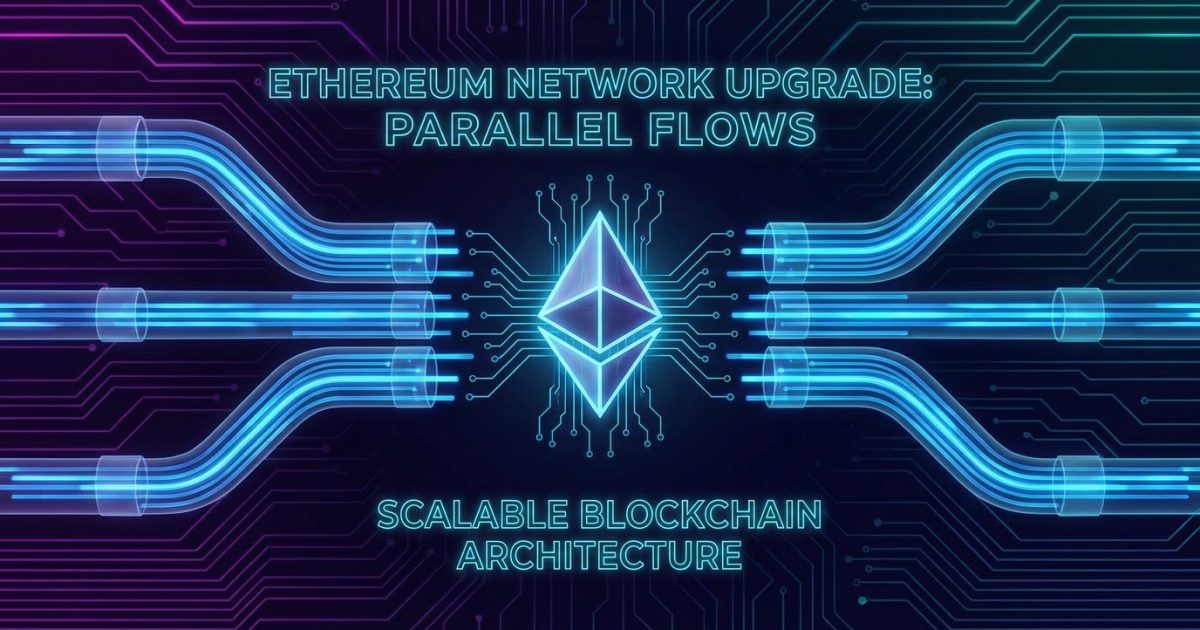
The first and most technically significant proposal is Block-Level Access Lists, standardised under EIP-7928. Currently, Ethereum processes transactions sequentially — each transaction waits for the previous one to complete before the EVM can begin executing the next. This is safe but slow, and it means that even simple transfers are bottlenecked behind complex contract calls.
EIP-7928 changes this by allowing Ethereum clients to pre-fetch a block’s full read and write set before execution begins. With the complete state access map available upfront, the client can identify which transactions are genuinely independent — meaning they don’t touch the same state variables — and execute those transactions in parallel.
According to developers at The Defiant, this also enables batched I/O and parallel state-root computation, addressing two of the most CPU-intensive parts of block processing. The combined effect is a potential 3x increase in effective throughput under realistic transaction mixes.
2. Enshrined Proposer-Builder Separation (ePBS)
The second major change is the enshrining of Proposer-Builder Separation directly into the Ethereum protocol. Currently, PBS is handled by a fragile off-chain relay network called MEV-Boost — a system that works well enough most of the time but creates trust dependencies on third-party relays that sit outside Ethereum’s security model.
Glamsterdam moves the builder-proposer handoff on-chain, eliminating relay trust requirements and significantly reducing the MEV-related centralization risk that has been a persistent critique of Ethereum’s validator economics.
For validators, ePBS also reduces the computational overhead of block production, since the split between the builder (constructing the optimal block) and the proposer (attesting and publishing it) becomes a clean on-chain protocol primitive rather than an off-chain coordination game.
Timeline and Risks
The tentative target for Glamsterdam is Q3 2026, with some developers previously suggesting a June 2026 mainnet date before the complexity of ePBS and BAL testing pushed estimates back.
The primary risk is integration complexity at mainnet scale. EIP-7928 has been well-received in devnet environments, but parallel execution requires clients to correctly identify independent transactions without errors — a single misclassification that leads to conflicting state writes would break block validity. Extensive multi-client testing across Ethereum’s four major client implementations (Geth, Nethermind, Besu, Erigon) is underway.
Ethereum core developer Tim Beiko has said the team is “following the data” on timeline rather than setting a fixed date, a posture consistent with Ethereum’s post-Merge approach of prioritising safety over speed-to-market.
What This Means for ETH Holders and DeFi
Glamsterdam is explicitly a Layer 1 scaling move, not a rollup-centric update. That distinction matters for ETH’s economic thesis. If L1 throughput increases 3x, more activity that currently migrates to rollups could remain on mainnet, which means higher base fee burns and potentially stronger ETH deflation.
For DeFi protocols, parallel execution could significantly reduce the latency of complex multi-step transactions — liquidations, arbitrage paths, and lending position updates — making protocols both faster and cheaper to operate during high-demand periods.
JPMorgan analysts, who recently warned that Ethereum risks continued underperformance relative to Bitcoin without stronger network utility, cited DeFi activity as a key metric to watch. Glamsterdam is directly aimed at removing the execution bottlenecks that suppress DeFi throughput at peak load.
FAQ
What is EIP-7928?
EIP-7928 is the Ethereum Improvement Proposal that introduces Block-Level Access Lists, enabling Ethereum clients to pre-fetch a block’s full state access map and execute non-conflicting transactions in parallel rather than sequentially.
When will Glamsterdam go live on Ethereum mainnet?
The current target is Q3 2026, though developers have emphasized that the timeline depends on multi-client testing results. An earlier June 2026 target was revised due to the complexity of enshrined PBS testing.
Will Glamsterdam make Ethereum cheaper to use?
Not directly — gas prices are determined by demand rather than execution speed. However, increased throughput means the network can handle more transactions before congestion pricing kicks in, which may reduce peak fee pressure during high-activity periods.
—
Sources: The Defiant, Phemex, BingX, CCN, CoinMarketCap