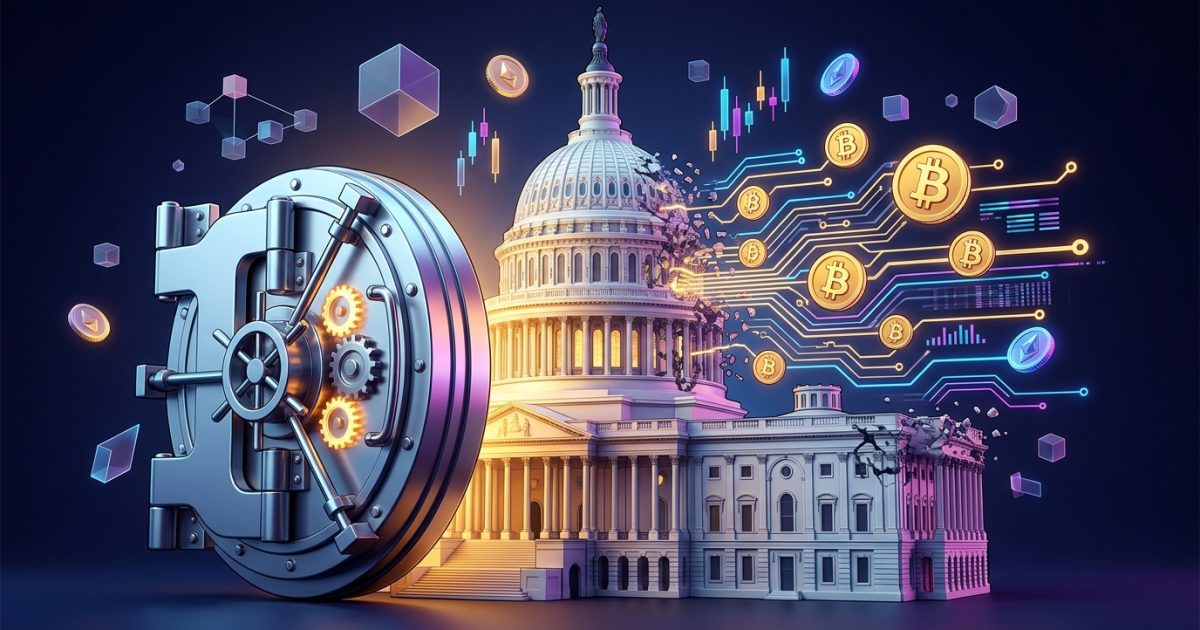
Crypto’s grown-up era: a week of tests on Capitol Hill, in the markets and on Wall Street
Crypto has entered what looks increasingly like its institutional adulthood, and last week offered the fullest test of that transition so far. Washington kept the industry’s biggest legislative hope alive, albeit barely. Wall Street pushed deeper into digital assets while becoming markedly choosier about which parts it wants. A hardware-wallet security scare sent billions of dollars of bitcoin moving between wallets. And a $1.5 billion hack landed North Korea in a United States courtroom.
Against that backdrop, bitcoin markets flashed sharply contradictory signals. Major corporate holders sold, miners added selling pressure, and treasury losses piled up, even as whales accumulated and hedge funds rotated toward bullish positioning. The picture that emerges is of an industry being stress-tested as it matures, with each constituency reacting differently to the same set of pressures.
The through-line, as CoinDesk’s weekly review of the five defining stories made clear, is that crypto is entering a more regulated, more institutionalised phase. U.S. lawmakers are still debating the Digital Asset Market Clarity Act while regulators refine their own rulemaking, and both tracks are proving messy.
Policy: the Clarity Act survives, for now
The Digital Asset Market Clarity Act missed the Senate’s August window, a outcome that angered an industry which had been hoping for a procedural vote before the congressional recess. But the market structure legislation will get another shot when lawmakers return in September, and that reprieve may matter more than the delay.
CoinDesk’s State of Crypto analysis made the case that waiting was arguably preferable to forcing a vote without sufficient support and watching the bill fail outright. A defeat on the Senate floor would not simply have ended this Congress’s effort; it would have reset the entire legislative process.
The stakes extend well beyond the current session. If the legislation collapses and lawmakers must start over next year, Democrats are likely to play a more prominent role in drafting the next version. Three Democratic women in particular could gain greater influence over the next round of crypto legislation, and all have generally approached digital assets with considerable scepticism. For an industry that has lobbied hard for regulatory certainty, that is the nightmare scenario: a restart under less sympathetic authorship.
Meanwhile, the regulatory train trundles along on a separate track. While Congress wrestles with broad market structure, the Securities and Exchange Commission and its sister agency, the Commodity Futures Trading Commission, have begun working on rules within their own remits. Even that process is proving fraught. The SEC said it is delaying a planned “innovation exemption” for tokenised securities after concerns from both the White House and Wall Street, including fears that moving too aggressively could complicate Clarity Act negotiations and reshape market structure without a full rulemaking process.
There is a certain irony here that should not be lost on market participants. For years the industry’s chief complaint was that nobody would tell it what the rules were. Now that rulemaking is underway in earnest, the complaint is about the shape and speed of those rules. That is progress of a kind. September will show whether Congress can actually agree on them, or whether the two-track approach fragments into competing, incompatible frameworks. Readers following the legislative sweep can track developments in our regulation coverage.
Markets: Strategy sold bitcoin just as the biggest holders accumulated
Bitcoin spent the week sending contradictory signals, and nowhere was the contradiction starker than in the behaviour of Strategy, the company formerly known as MicroStrategy. The firm sold 1,690 bitcoin and raised $653 million from sales of its common stock. It has now sold five times this year, totalling roughly 7,000 BTC.
That is a sharp reversal for a company whose founders spent years insisting they would never sell a single coin. Strategy did not merely participate in the bitcoin treasury trade; it effectively created it. The formula of raising capital, buying bitcoin and repeating became a template copied by companies worldwide, turning corporate balance sheets into leveraged bets on the cryptocurrency. When the originator of that trade starts selling, the market takes notice, and the broader treasury cohort feels the tremor.
That sensitivity explains why routine bitcoin movements are suddenly under intense scrutiny. When roughly $320 million of bitcoin moved from wallets associated with the Tokyo-listed Metaplanet, speculation quickly followed that the company was selling. Chief executive Simon Gerovich denied that was the case, but the episode illustrates the nervousness now surrounding any large transfer from a known corporate holder.
The treasury trade’s downside was on display elsewhere. Trump Media, the Truth Social parent, reported $360.6 million in first-half losses tied to digital assets and digital assets pledged, much of it unrealised. The company held 9,477 bitcoin worth about $557 million at the end of June, down from 9,542 at the end of March. It also scrapped, alongside Crypto.com and Yorkville Acquisition, a proposed publicly traded CRO treasury company and abandoned a separate ETF-servicing partnership, citing market conditions and shifting priorities.
Public bitcoin miners, an easily overlooked source of coins hitting the market, added roughly $1.78 billion of selling pressure over the period. Supply from miners is rarely dramatic in isolation, but at the margin it compounds the pressure from corporate sellers.
And yet the bullish case was strengthening at the same time. Bitcoin’s so-called strongest hands were accumulating, with the number of wallets holding more than 10,000 BTC reaching a six-month high. Hedge funds were shifting too. Leveraged funds on CME moved away from the structural shorts associated with the once-popular bitcoin basis trade and toward a net-long position.
The divergence matters. If leveraged funds are abandoning the basis trade, the mechanical short hedging that accompanied ETF inflows is easing. Combined with whale accumulation, that suggests smart money is pricing in upside even as corporate and miner supply hits the market. Whether the whales or the sellers prove right will define the next leg of the cycle.
Finance: Wall Street wants crypto, but it is getting picky about which parts
While the bitcoin-treasury trade looks increasingly complicated, Wall Street’s crypto expansion is becoming more straightforward, and more selective. The week’s deal flow tells the story.
Fidelity moved to add staking and quarterly payouts to its nearly $900 million ether ETF. The proposal would allow the fund to earn staking rewards, with 85 per cent of gross rewards retained by the fund and 15 per cent going to service providers. If approved, it would mark a meaningful enhancement to an already successful product, turning a passive holding vehicle into something closer to a yield-bearing instrument.
Goldman Sachs agreed to buy NEOS for $2.25 billion, expanding its position in derivatives-based ETFs and gaining exposure to bitcoin income products in the process. The acquisition signals that major banks see durable, fee-generating demand for structured crypto exposure, provided it arrives wrapped in familiar wrappers.
In stablecoins, Mastercard completed its $1.8 billion acquisition, the payment network’s deepening bet on the infrastructure underpinning dollar-pegged tokens. The deal anchors the week’s finance theme: incumbents are not abandoning crypto, they are consolidating around the pieces with proven economics, while weaker projects, exchanges and tokenisation plays fold or reset in a broader industry shakeout.
The analyst’s view: maturation, not retreat
Taken together, the week’s five stories describe an industry in transition rather than decline. The policy track is slow but moving. Corporate holders are disciplining a trade that grew overheated. Wall Street is underwriting the infrastructure layer with multi-billion-dollar conviction, even as it lets speculative excess wash out.
The tension to watch is September. A failed Clarity Act vote hands the pen to sceptical Democrats; a passed one locks in a framework the industry can build against. Until then, expect the two-track dynamic of congressional negotiation and agency rulemaking to keep markets guessing, with whales accumulating into the uncertainty.