# HTX Delists Trump-Backed USD1 Stablecoin After World Liberty Financial Freezes Exchange Addresses
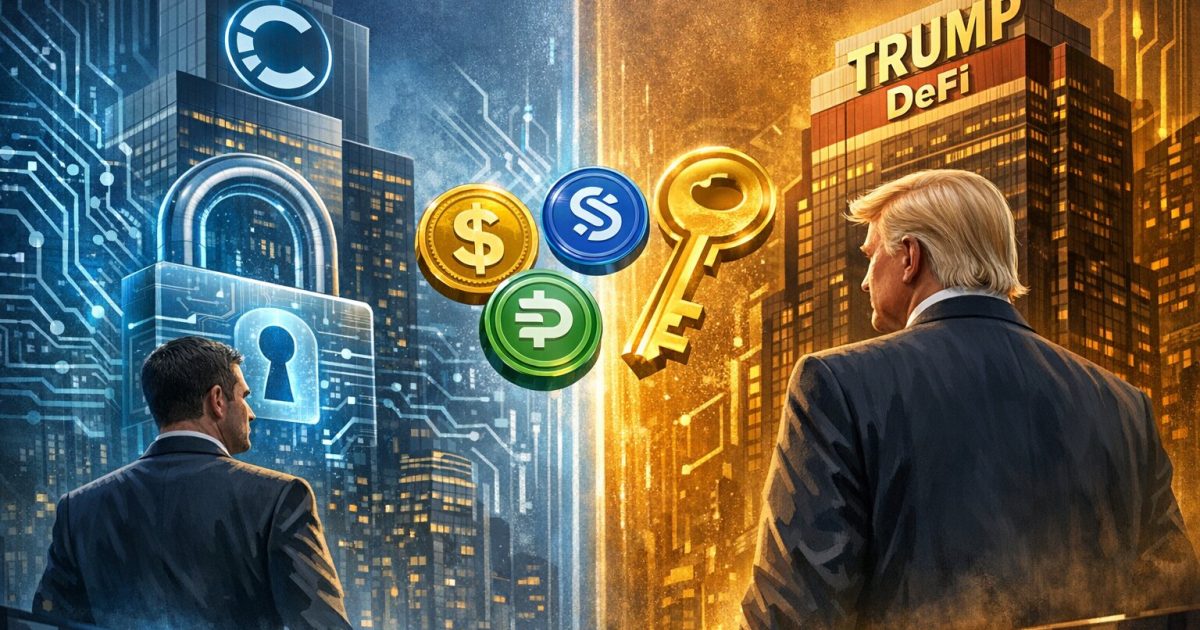
HTX, one of the world’s largest cryptocurrency exchanges, has taken the drastic step of delisting the USD1 stablecoin — the digital asset tied to Donald Trump’s World Liberty Financial (WLFI) project — after WLFI unilaterally froze HTX-linked on-chain addresses without warning.
The move has escalated into an open standoff between the Justin Sun-linked exchange and the Trump family-backed DeFi project, leaving thousands of users locked out of their assets and raising fundamental questions about who truly controls stablecoins.
HTX Strikes Back
HTX announced on June 6 that it would suspend all trading pairs involving USD1 and WLFI tokens effective immediately. The exchange cited “abnormal on-chain operations” by World Liberty Financial as the reason, specifically the freezing of addresses associated with HTX users.
“World Liberty Financial, without any notification or justification, froze the on-chain addresses related to HTX,” the exchange said in a statement. “This action directly harms the interests of our users. As a protective measure, HTX has decided to delist USD1 and WLFI.”
The decision was not taken lightly. USD1 trading volume on HTX had been significant, with the stablecoin pegged to the US dollar and promoted as a compliant digital asset backed by the Trump family’s venture. The delisting means HTX users holding USD1 or WLFI can no longer trade these assets on the platform.
What Is USD1 and World Liberty Financial?
World Liberty Financial (WLFI) is a DeFi project backed by Donald Trump and his family. Launched in late 2025, WLFI aims to build a compliant DeFi ecosystem on Ethereum. USD1 is its flagship stablecoin, designed to compete with USDT and USDC by offering transparency and regulatory compliance.
The project has been controversial from the start. Critics have questioned whether the Trump family’s involvement creates conflicts of interest, especially given Trump’s pro-crypto stance during his presidential campaign. Supporters argue that WLFI brings mainstream legitimacy to DeFi.
The freeze of HTX-related addresses suggests WLFI may have detected suspicious activity — potentially related to sanctions compliance or anti-money laundering (AML) concerns. However, the lack of advance notice has angered the exchange and its users.
Implications for the Stablecoin Market
This incident exposes a critical fault line in the stablecoin ecosystem: the power of issuers to freeze assets unilaterally.
Unlike USDT (Tether) and USDC (Circle), which have established protocols for freezing addresses in response to law enforcement requests, USD1’s freeze mechanism appears to be more opaque. The situation echoes the 2022 Tornado Cash sanctions, where USDC issuer Circle froze $75,000 worth of assets linked to sanctioned addresses — but in that case, the freeze was government-mandated.
Here, WLFI froze addresses on its own accord, without public explanation. This raises uncomfortable questions for traders and liquidity providers who parked capital in USD1 under the assumption of stability and neutrality.
Market Reaction
The price of USD1 briefly depegged to $0.97 on secondary markets as panic selling set in following the delisting announcement. It has since recovered to $0.99, but trading volumes have collapsed.
WLFI token, the governance token of World Liberty Financial, dropped 22% on the news, reflecting concerns about the project’s governance and operational transparency.
The broader market reaction has been muted compared to the Bitcoin-driven selloff, but the incident adds another layer of uncertainty to an already fragile crypto market environment.
What Happens Next?
HTX users holding USD1 and WLFI face an uncertain path. The exchange has not yet announced a withdrawal timeline or compensation plan. Users are effectively trapped — they cannot trade on HTX, and moving assets to other exchanges is complicated if WLFI continues to freeze HTX-linked addresses.
The standoff may ultimately require legal intervention. If WLFI cannot or will not unfreeze the addresses, affected users could pursue action against both parties.
FAQ
Why did WLFI freeze HTX addresses?
World Liberty Financial has not publicly explained its decision. Speculation ranges from AML compliance flags to sanctions concerns, but no official reason has been given.
Can USD1 holders on HTX recover their funds?
It depends on whether WLFI unfreezes the addresses. HTX has advised users to contact WLFI support, but the situation remains unresolved. Legal action may be necessary.
Does this affect other exchanges?
Currently only HTX is affected. USD1 continues trading on other platforms, though liquidity may tighten as the situation develops.
—