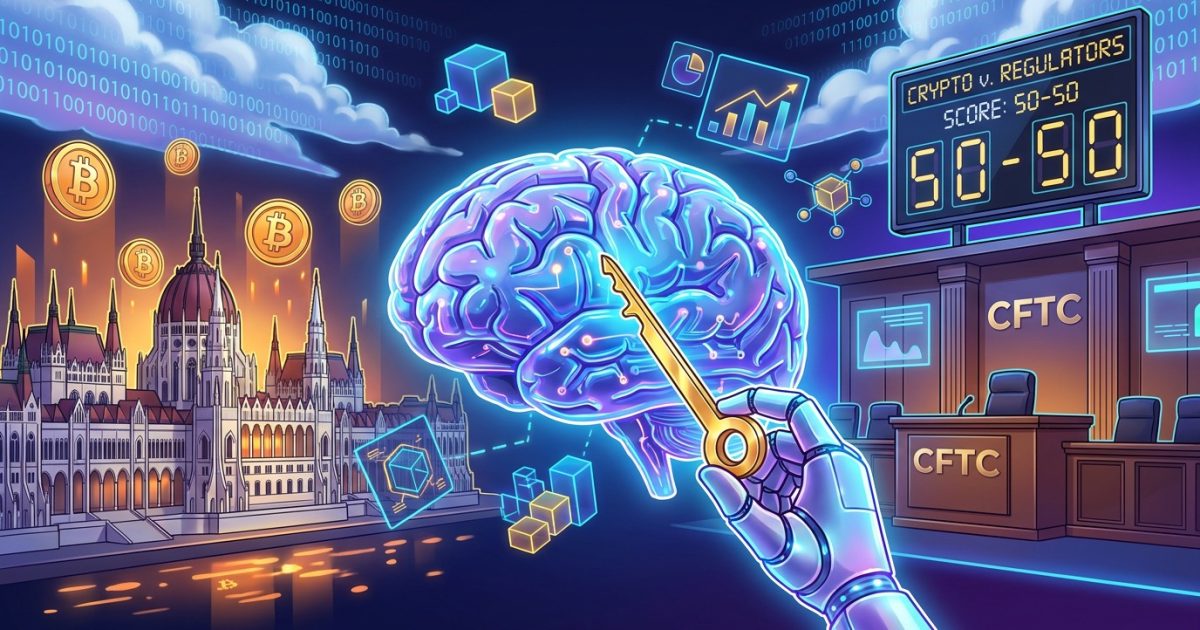
Hungary Reverses Crypto Restrictions, Decriminalises Trading
Hungary has moved to decriminalise crypto trading, unwinding restrictions introduced last year that had made some crypto-to-fiat and crypto-to-crypto conversions punishable by prison terms. The Tisza government spokesperson Anita Köböl announced at a Thursday press conference that the country would remove rules requiring approved validation for crypto conversions. These rules had pushed platforms such as Revolut to suspend crypto services in Hungary. The significance is that Hungary is backing away from one of Europe’s tougher approaches to retail crypto activity, which could reopen access for users and service providers. This regulatory shift marks a notable reversal in a jurisdiction that had previously taken a hard line on digital asset transactions. The move is likely to encourage other European nations to reconsider their own stances, potentially leading to a more fragmented regulatory landscape across the continent. For the crypto industry, this signals that strict enforcement can be rolled back when it stifles innovation or drives users to unregulated channels. Market participants in Hungary may now see a resurgence in local exchange activity and service offerings, as firms like Revolut could resume crypto services. The broader implication is that regulatory tightening and loosening are occurring simultaneously in different jurisdictions, creating a complex environment for global crypto businesses.
CFTC Proposes Framework for Prediction Markets, Treats Sports Contracts as Public Interest
In the United States, the Commodity Futures Trading Commission (CFTC) proposed new framework rules for prediction markets that would treat sports event contracts as generally consistent with the public interest, despite federal law classifying them as “gaming.” The proposal, released on Wednesday, draws a distinction between contracts based on final scores or win-loss records, which may improve price discovery, and contracts tied to player injuries or officiating decisions, which could encourage manipulation and are therefore less likely to qualify. This move by the CFTC represents a significant step in the evolution of prediction markets, which have grown in popularity as tools for forecasting events beyond traditional financial markets. By allowing sports contracts that focus on objective outcomes, the CFTC aims to harness the informational efficiency of these markets while mitigating risks of manipulation. The proposal could open the door for regulated platforms to offer sports prediction contracts, potentially attracting a new wave of retail and institutional participants. However, the distinction between permissible and impermissible contracts may lead to legal challenges and require clear definitions. The crypto industry, which has increasingly intersected with prediction markets through blockchain-based platforms, stands to benefit from clearer regulatory guidelines. This development also highlights how adjacent markets are shaping the risk and opportunity landscape for crypto, as prediction markets often rely on digital tokens for settlement.
AI Researcher Jailbreaks Anthropic’s Latest Model Within 48 Hours
An AI researcher known as “Pliny the Liberator” claimed to have jailbroken Anthropic’s latest model, Claude Fable 5, within 48 hours of its launch. The model had been released on Tuesday as a safety-tuned version of Anthropic’s more powerful Mythos model, which the company said was too dangerous to release widely. The broader importance is that it highlights how quickly new AI guardrails can be tested or bypassed, a concern for both cybersecurity and model safety. This incident underscores the ongoing cat-and-mouse dynamic between AI developers and researchers seeking to probe vulnerabilities. For the crypto industry, which increasingly integrates AI for trading, security, and decentralised applications, such breaches raise questions about the reliability of AI-driven tools. If advanced models can be jailbroken rapidly, their use in critical financial systems could introduce unforeseen risks. The event also fuels debates about the pace of AI deployment and the adequacy of safety measures. As AI and crypto converge, regulators may need to consider cross-sector implications, particularly in areas like automated trading and smart contract auditing. The speed of the jailbreak—just two days after launch—suggests that current safety protocols may be insufficient, potentially prompting stricter oversight of AI models used in financial contexts.
Market and Regulatory Implications
These developments show that crypto regulation is still tightening and loosening in different jurisdictions at the same time, while adjacent markets like prediction markets and AI safety are increasingly shaping the industry’s risk and opportunity landscape. In Hungary, the decriminalisation of crypto trading could serve as a case study for other European nations grappling with how to balance consumer protection with innovation. The CFTC’s proposal on prediction markets may set a precedent for how US regulators approach novel financial instruments, potentially influencing the treatment of crypto derivatives. Meanwhile, the AI jailbreak incident highlights the fragility of security in emerging technologies, a lesson that crypto projects building on AI should heed. For investors, these stories underscore the importance of monitoring regulatory shifts across borders and the evolving interplay between AI and blockchain. The crypto market may see increased volatility as participants digest these signals, but the long-term trend points toward greater integration with traditional finance and technology sectors. As always, staying informed through reliable sources like Bitcoin coverage is crucial for navigating this dynamic landscape.
Closing Analysis
The convergence of regulatory easing in Hungary, regulatory refinement in the US, and a stark reminder of AI vulnerabilities paints a picture of an industry in flux. Crypto is no longer isolated; its fate is tied to decisions in national capitals, agency rulebooks, and the latest breakthroughs in artificial intelligence. The Hungarian move may embolden other governments to relax crypto rules, while the CFTC’s proposal could legitimise prediction markets as a mainstream tool. Yet the AI jailbreak serves as a cautionary tale that technology’s promise comes with risks that can emerge overnight. For market participants, the key takeaway is that adaptability and due diligence remain paramount. The next major shift could come from any direction—legislative, regulatory, or technological—and those who track these developments closely will be best positioned to capitalise on opportunities while managing threats.