
Marathon Holdings – the company that trades as MARA – built its reputation as one of the world’s most aggressive bitcoin miners. For years, the playbook was simple: mine as much BTC as possible, hold it, and let the price do the work. That playbook is being torn up.
First-quarter earnings released Monday tell a different story. MARA sold $1.5 billion worth of bitcoin during the quarter, dropped two places to become the fourth-largest publicly traded bitcoin holder, posted a $1.3 billion net loss, and announced it no longer plans to make large-scale purchases of the ASIC mining machines that defined its business model. The pivot to AI and high-performance computing infrastructure is no longer a future ambition – it’s the current strategy.
Q1 Results: The Numbers Behind the Pivot
Revenue fell 18% year over year to $174.6 million. The net loss of approximately $1.3 billion was driven largely by unrealized losses on MARA’s 38,689 bitcoin holdings as BTC declined 17% over the trailing 12-month period.
The single biggest transaction was a $1.1 billion bitcoin sale near the end of the quarter, executed to fund the repurchase of convertible notes. Combined with earlier sales, total BTC disposals for the period hit $1.5 billion – a striking shift for a company that once positioned its bitcoin stack as a core asset never to be touched.
Mining activity itself actually grew. Energized hashrate rose 33% year over year to 72.2 exahash per second, and the company mined 2,247 bitcoin in the quarter, up from 2,011 in the previous period. Mining is still running. The question is what comes next.
Where the Power Goes From Here
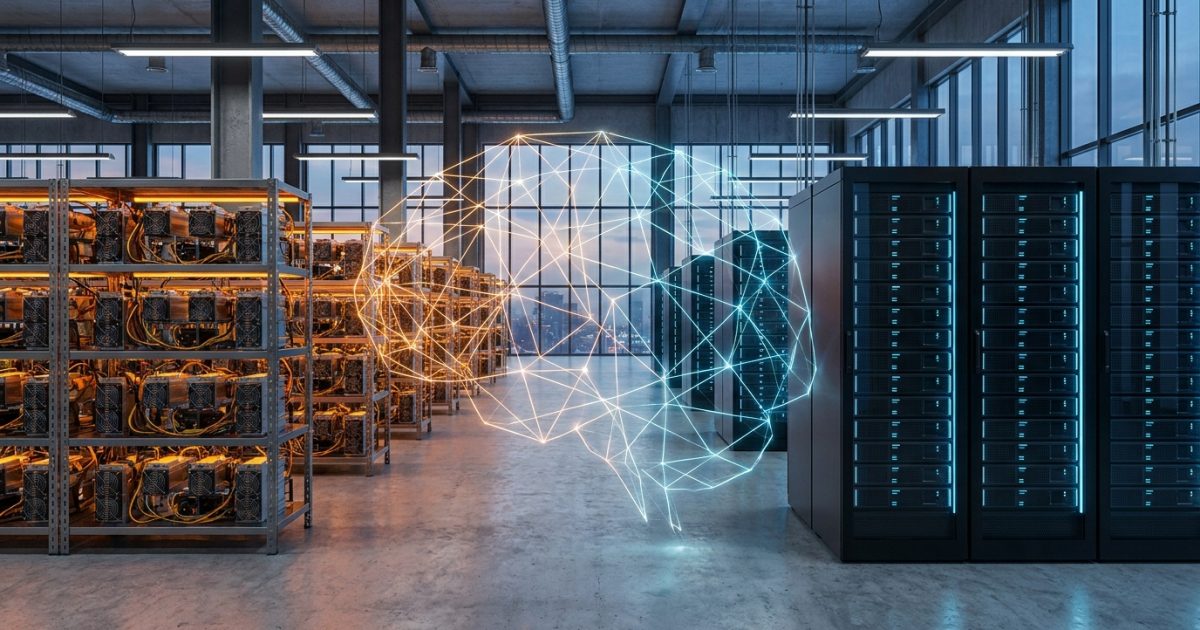
MARA’s language around future investment has shifted decisively. Rather than signaling appetite for more ASIC machines, the company is framing its power infrastructure as a flexible resource that can serve bitcoin mining today and AI computing tomorrow.
The company said up to 90% of its non-hosted mining capacity could eventually be redirected toward AI and IT infrastructure. That isn’t a rounding error. It signals that management sees the value of its operation less hash production and more raw power capacity – something that’s increasingly in short supply as data center demand surges globally.
The deals back up the words. MARA has agreed to acquire Long Ridge Energy and Power, a gas-fired power plant and data center campus located in Ohio, in a $1.5 billion transaction with FTAI Infrastructure. The site is designed to eventually support more than 600 megawatts of AI load – enough to power a sizeable cloud facility.
Separately, MARA has a strategic partnership with Starwood Capital, adding institutional real estate and infrastructure expertise to what was previously a pure-play crypto mining operation.
Earlier this year, MARA also closed the acquisition of a 64% stake in Exaion, a subsidiary of French state energy company EDF, targeting private enterprise-grade AI inference infrastructure across Europe. The geographic and sector diversification is notable for a company that started as a straightforward bitcoin miner.
The Miner-to-AI Transition isn’t MARA Alone
MARA’s move reflects a broader structural shift across the Bitcoin mining sector. Several large publicly traded miners have been looking at or executing similar pivots as the post-halving environment reduces mining profitability per unit of electricity consumed.
Miners sit on assets that AI hyperscalers desperately want: access to large amounts of low-cost power, existing land permits and grid connections, and the operational experience to run energy-intensive facilities at scale. The barriers to building new data centers from scratch – permitting timelines, utility interconnection queues, construction lead times – mean that repurposing mining sites offers a genuine shortcut into AI infrastructure.
The strategic logic has already attracted Wall Street attention. Analysts covering MARA have started framing it as an energy and infrastructure play, not a crypto miner — a shift that implies a different valuation methodology and a different investor base.
Bitcoin Mining doesn’t Disappear – It Just Gets Smaller
MARA has been careful not to declare mining dead. Bitcoin remains, in the company’s framing, its “operational foundation.” The hashrate growth in Q1 supports that view; MARA isn’t shrinking its mining capacity, it’s simply choosing not to expand it at the rate it once did.
MARA framed the bitcoin sell-down as a liquidity and debt management decision — not a retreat from the asset. The company still holds nearly 39,000 BTC, which at current prices represents a significant position. If bitcoin runs hard in the back half of 2026, MARA will benefit from that exposure even if it’s deploying capital toward Ohio data centers in the meantime.
What has changed is the implicit message to investors: MARA is no longer purely a bitcoin price proxy. The business is being restructured so that its cash flows are less dependent on the spot price of a single volatile asset and more anchored in power generation contracts and infrastructure services.
What Happens to the Fourth-Largest Public Bitcoin Holder
The slide from second to fourth place in the publicly traded bitcoin holder rankings is symbolic but also practically significant. MicroStrategy (now being Strategy), BlackRock via its ETF, and at least one other entity now hold more bitcoin in a publicly traded wrapper.
For years, MARA’s large and growing BTC balance was a key part of its investment thesis. If institutional investors wanted direct Bitcoin exposure without ETF fees, they could buy MARA stock and get both the mining operation and the BTC treasury. That story weakens when the treasury gets tapped as working capital.
The short-term result is a more conservative balance sheet and less debt pressure. The longer-term result remains to be seen. MARA is effectively betting that AI and high-performance computing infrastructure will generate more reliable cash flows over the next decade than bitcoin mining, and that the power assets it’s accumulating will be worth more than the mining rigs they replace.
Frequently Asked Questions
Why did MARA sell $1.5 billion in bitcoin? MARA sold bitcoin primarily to improve liquidity and retire convertible debt. The largest single sale – $1.1 billion – was executed near the end of Q1 2026 to fund a convertible note repurchase. The company described both as balance sheet management, not a change in its bitcoin conviction.
what’s MARA’s AI infrastructure strategy? MARA is repositioning its power infrastructure to support AI and high-performance computing alongside bitcoin mining. The company estimates that up to 90% of its non-hosted mining capacity could eventually support AI and IT loads. Key moves include the $1.5 billion acquisition of Long Ridge Energy in Ohio and the purchase of a majority stake in Exaion, an EDF subsidiary focused on enterprise AI infrastructure in Europe.
Does MARA still mine bitcoin? Yes. MARA mined 2,247 bitcoin in Q1 2026, up from 2,011 in the previous quarter, and its energized hashrate grew 33% year over year to 72.2 exahash per second. Bitcoin mining remains part of the business, but the company is no longer signaling plans for large-scale ASIC machine purchases, suggesting it doesn’t intend to aggressively expand pure mining capacity.