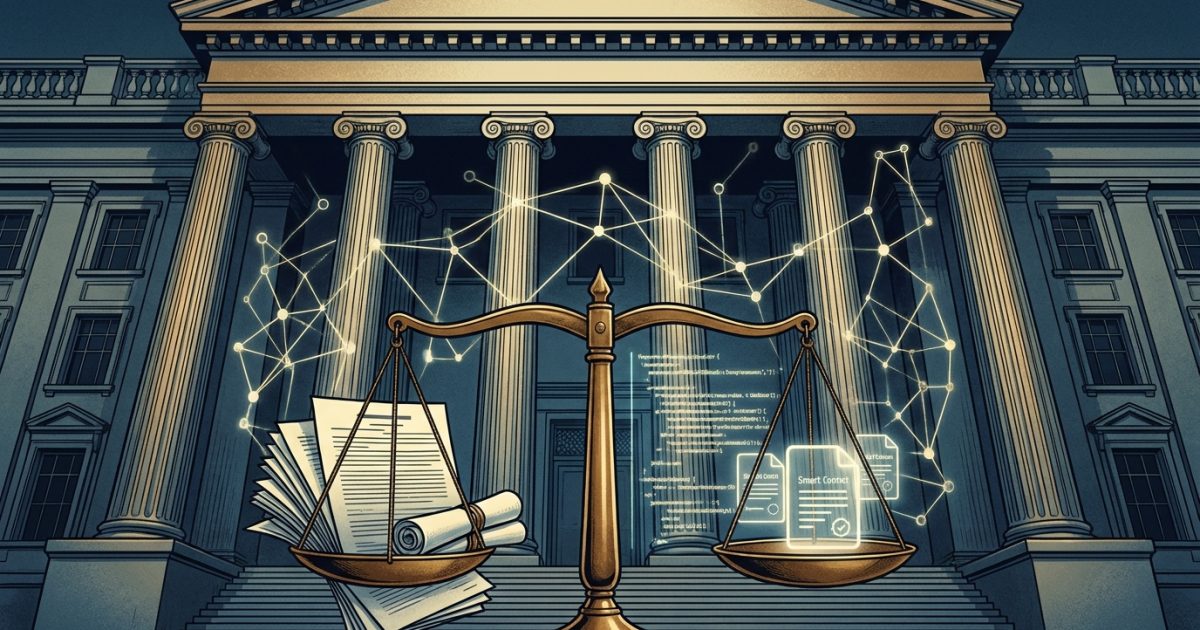

Securities and Exchange Commission Chair Paul Atkins has laid out a detailed vision for the future of crypto regulation, identifying four specific areas where new rules are coming – a system that market participants are calling the clearest regulatory plan the agency has produced in years.
Speaking at the AI+ Expo in Washington on May 8, 2026, Atkins argued that financial markets are in a structural transition away from traditional centralised systems and toward blockchain-based infrastructure. He said the SEC must adapt its rules to match that reality rather than trying to force onchain markets into frameworks designed for 20th-century intermediaries.
The Four Pillars
Atkins identified four distinct regulatory areas where the SEC is preparing action:
1. Onchain Trading Systems The SEC is evaluating how to classify and regulate trading activity that occurs directly on public blockchains. This includes automated market makers, liquidity pools, and other smart-contract-based trading mechanisms that execute without a traditional exchange operator. Atkins suggested the agency is considering whether existing alternative trading system rules apply, or whether new categories are needed.
2. DEX Front-End Broker-Dealer Status In a potentially significant move, Atkins signalled that decentralised exchange user interfaces – the websites and applications through which users access DEX liquidity – may face broker-dealer registration requirements. The logic is that while the underlying protocol is decentralised, the front-end operators who build and maintain the user interfaces act as gatekeepers and may functionally resemble broker-dealers.
If set up, this would represent a major shift. DEX front-end operators currently operate largely outside the SEC’s broker-dealer system, and a registration requirement would impose compliance obligations around anti-money laundering, customer identification, and record-keeping.
3. Instant Settlement and Blockchain Clearing Atkins said the agency is examining how instantaneous blockchain settlement – trades that settle in seconds rather than days – interacts with existing clearing agency rules. The current T+1 settlement standard for U.S. Equities was itself a recent reform; on-chain settlement happens in real time, creating questions about whether clearing houses are even for blockchain-native assets.
The SEC is reportedly looking at whether existing clearing agency registration requirements should apply to smart-contract-based settlement systems, and whether exemptions or new frameworks are appropriate.
4. Crypto Vault Yield Applications The fourth pillar addresses crypto yield products – protocols and applications that allow users to deposit digital assets and earn returns, commonly known as crypto vaults or yield aggregators. Atkins indicated the SEC is evaluating whether these products constitute securities offerings and what disclosure and registration requirements should apply.
This is a sensitive area for the DeFi sector, as many yield-generating protocols have operated without securities registration on the basis that they’re software tools rather than investment products.
Why This Matters Now
The timing of Atkins’ speech is notable. His predecessor at the SEC, Gary Gensler, pursued a broad enforcement strategy against the crypto sector, arguing that most tokens and many DeFi protocols were unregistered securities. That approach generated significant legal uncertainty and a wave of enforcement actions.
Atkins, appointed by President Trump, has signalled a shift toward rulemaking over enforcement – a distinction that the industry has welcomed. Rather than using existing laws aggressively against crypto firms, the SEC under Atkins appears to be moving toward crafting specific rules that acknowledge blockchain’s unique characteristics.
For DeFi developers, the shift from enforcement ambiguity to rulemaking is a double-edged sword. On one hand, clear rules provide a foundation to build on. On the other, DEX front-end broker-dealer requirements could impose significant compliance costs on teams that have never operated within a registered financial services system.
CLARITY Act Context
Atkins’ four-pillar system arrives as Congress is also advancing its own crypto legislation. The CLARITY Act – a complete market structure bill – passed the Senate Banking Committee 15-9 in mid-May and is now advancing to the full Senate. The bill attempts to draw a clear line between digital assets that should be regulated as securities and those that should be treated as commodities.
The two processes – SEC rulemaking and congressional legislation – are running in parallel, creating some uncertainty about which system will ultimately govern specific activities. Market participants note that if the CLARITY Act passes in its current form, some of Atkins’ four pillars may need to be revised to align with the statutory system.
Legal experts tracking both processes say the interaction between the legislation and the SEC’s rulemaking agenda will be one of the most consequential regulatory stories in crypto for the remainder of 2026.
Industry Reaction
Initial reactions from the DeFi community were cautious but generally positive about the shift toward rulemaking. Several major DEX protocols noted that regulatory clarity – even if it comes with compliance obligations – is preferable to open-ended enforcement risk.
The DEX front-end broker-dealer question drew the most concern. Multiple teams running major DeFi front-ends said they’re monitoring the situation closely and are in early conversations with legal counsel about what registration requirements could mean for their operations.
Traditional financial institutions, unsurprisingly, welcomed the signals. The clearer the regulatory system, the easier it’s for banks and asset managers to build on public blockchains – a trend already underway with JPMorgan’s JLTXX tokenized fund and Charles Schwab’s crypto trading rollout.
FAQ
What are SEC Chair Atkins’ four pillars for crypto regulation? The four pillars are: (1) onchain trading system classification, (2) potential broker-dealer registration for DEX front-end operators, (3) instant blockchain settlement and clearing agency rules, and (4) regulatory treatment of crypto vault yield applications.
Will DEX platforms need to register as broker-dealers? SEC Chair Atkins signalled that DEX front-end operators – the teams building the websites and interfaces through which users access decentralised exchange liquidity – may need to register as broker-dealers. No formal rule has been proposed yet; the SEC is in the evaluation and rulemaking preparation phase.
How does this relate to the CLARITY Act? The CLARITY Act is congressional legislation advancing through the Senate that attempts to define when digital assets are securities versus commodities. The SEC’s four-pillar rulemaking agenda and the CLARITY Act are parallel processes; if the legislation passes, some SEC rules may need to align with the statutory definitions it establishes.