Meta description: SEC Chair Paul Atkins outlined four specific areas for new crypto rulemaking: onchain trading systems, DEX broker-dealer status, instant blockchain settlement, and crypto vault yield apps.
Focus keyword: SEC Paul Atkins onchain crypto rules 2026 four pillars
Category: Regulation News (56)
Slug: sec-atkins-four-pillars-onchain-crypto-rules-dex-vaults-settlement-2026
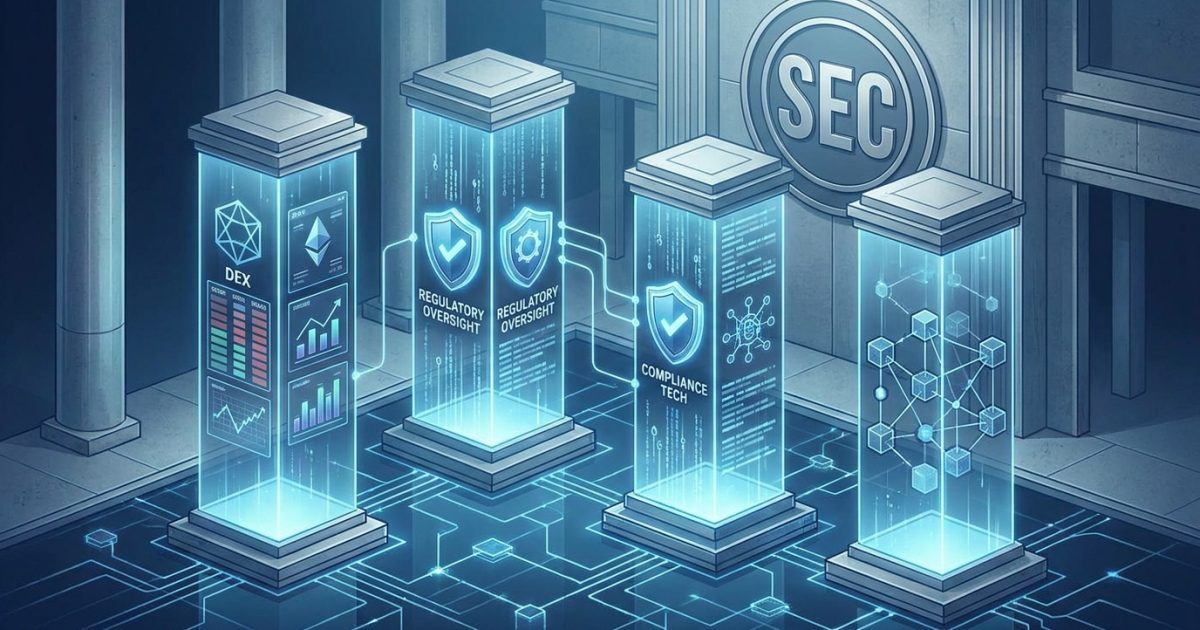
SEC Chairman Paul Atkins has signaled the most detailed plan yet for how the agency intends to bring blockchain-based financial markets under existing securities law – and the scope is broad. In remarks at Bitcoin Las Vegas 2026 and at a May 8 agency address, Atkins outlined four specific regulatory pillars that will guide the SEC’s approach to crypto market structure as Congress works in parallel on the CLARITY Act.
The four pillars represent a departure from the enforcement-first posture of his predecessor and a move toward active rulemaking – a shift industry participants have lobbied for since the SEC’s initial crypto enforcement actions under former Chair Gary Gensler.
Pillar One: Onchain Trading Systems
The first and broadest pillar addresses how existing securities rules apply to blockchain-based trading platforms. Atkins indicated the SEC is preparing guidance that would allow tokenized securities to trade on-chain under a modified regulatory system – potentially including an new idea exemption that would let compliant platforms operate without traditional exchange registration.
This is significant for the tokenized securities market, where companies like Ondo Finance, Securitize, and several bank-backed platforms have built infrastructure but faced uncertainty about whether their products require full securities exchange registration.
“An new idea exemption for onchain tokenized securities trading is coming within weeks,” Atkins was reported to have said at Bitcoin Las Vegas. That timeline – if met – would represent the most concrete regulatory accommodation for on-chain trading in SEC history.
Pillar Two: Broker-Dealer Status for DEX Interfaces
The second pillar addresses a question that has created significant anxiety in the DeFi industry: whether the front-end interfaces (websites and apps) through which users access decentralized exchanges constitute broker-dealer activity requiring SEC registration.
Atkins signaled the agency is working on a system to address this, which analysts expect will draw a distinction between automated protocol activity (which wouldn’t require registration) and curated, fee-generating interfaces (which might). This would be a meaningful relief for DEX operators who have operated under threat of potential enforcement action.
The Uniswap Labs case – in which the DeFi protocol’s front-end faced prior SEC scrutiny – is widely seen as the backdrop for this portion of Atkins’ remarks.
Pillar Three: Blockchain Settlement and Clearing
Traditional securities clearing operates on a T+1 or T+2 cycle, meaning trades settle one to two business days after execution. Blockchain-native settlement can in principle occur in seconds, but current securities law requirements for clearing and settlement create regulatory barriers to full atomic settlement.
Atkins indicated the SEC is examining whether existing clearing rules can be updated to handle blockchain settlement infrastructure – a move that could eliminate billions of dollars in counterparty risk currently absorbed by central clearing parties like the DTCC.
This pillar is the most technically complex of the four and will likely require coordination with the CFTC and Treasury in addition to SEC rulemaking.
Pillar Four: Crypto Vault Yield Applications
The fourth pillar is the most immediately contentious. Crypto vault products – applications that allow users to deposit digital assets and earn yield through automated lending, liquidity provision, or staking – have proliferated across both CeFi and DeFi. The SEC has historically viewed certain yield-bearing crypto products as unregistered securities.
Atkins signaled the agency is developing a system to distinguish between yield-bearing products that constitute investment contracts (and so require registration) and those that are more analogous to traditional bank deposit products. The GENIUS Act stablecoin bill, which the Senate is also weighing, intersects with this question directly.
For platforms like Coinbase, which has long sought regulatory clarity on its cbBTC yield products, and DeFi protocols offering lending functionality, this pillar has the most direct near-term business implications.
What Changes and What Doesn’t
Atkins was explicit that SEC administrative action under existing law isn’t a substitute for legislation. He stated he has urged Congress to advance the CLARITY Act to President Trump’s desk, noting that statutory authority provides more durable certainty than agency rulemaking that could be reversed by a future administration.
The CLARITY Act committee markup vote today is so complementary to, rather than competitive with, Atkins’ four-pillar plan. Together, they represent the most favorable regulatory environment for crypto market structure that U.S. Industry participants have encountered.
For market participants, the practical implication is that meaningful regulatory accommodation for onchain trading, DeFi infrastructure, and crypto yield products is no longer speculative – it’s in active development at the nation’s primary securities regulator.
FAQ
What are the SEC’s four pillars for crypto regulation under Chair Atkins? SEC Chair Paul Atkins outlined four areas for new crypto rulemaking in May 2026: (1) onchain trading systems and tokenized securities, (2) broker-dealer status for DEX front-end interfaces, (3) blockchain-based clearing and settlement infrastructure, and (4) crypto vault and yield-bearing application regulation.
Will SEC rulemaking replace the CLARITY Act? No. Atkins has explicitly stated that administrative SEC action is a complement to, not a substitute for, congressional legislation. He has urged lawmakers to pass the CLARITY Act to provide statutory certainty. Both tracks are proceeding in parallel.
How will the SEC’s onchain trading rules affect DeFi? The most immediate DeFi impact is expected from the broker-dealer pillar, which would clarify whether DEX front-end interfaces require SEC registration. A system distinguishing automated protocol activity from curated fee-generating interfaces could relieve significant regulatory pressure on DeFi platforms without requiring them to register as broker-dealers.
Sources: CoinDesk, Phemex, Bitcoin.com News, Yahoo Finance (SEC Chair Atkins speech coverage)