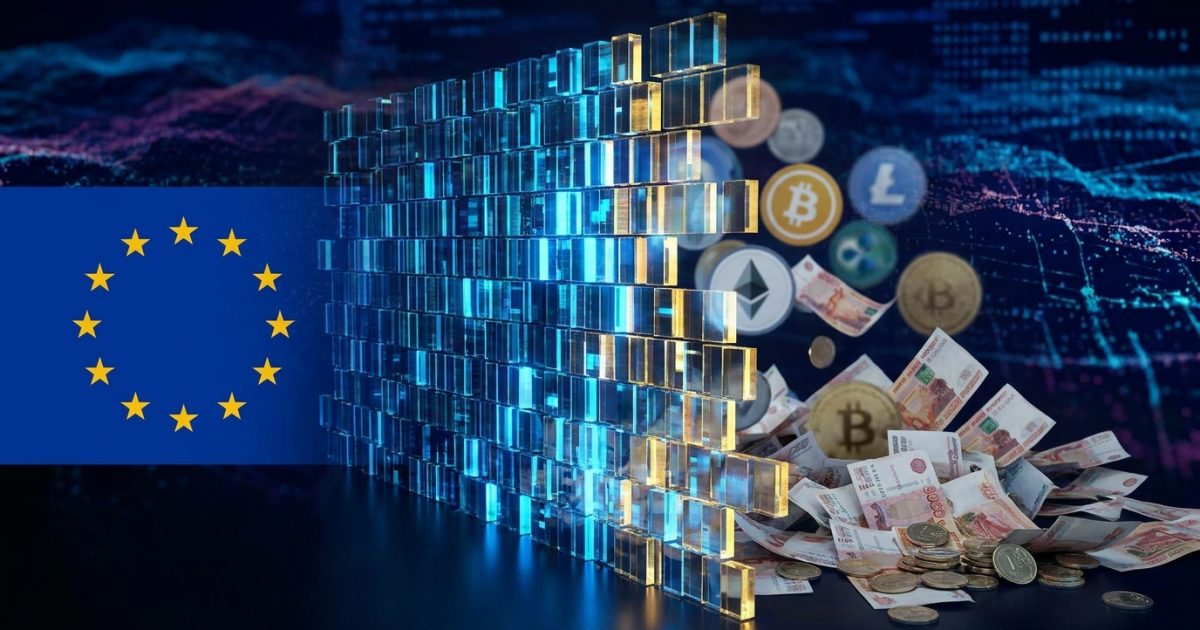

The European Union dropped its most aggressive crypto sanctions yet on April 23, imposing a blanket ban on all cryptocurrency platforms and providers based in Russia as part of its 20th sanctions package targeting the country over its ongoing war in Ukraine.
The package goes beyond previous measures by pulling stablecoins, Russia’s central bank digital currency, and even third-country intermediaries into the sanctions net. EU citizens are now barred from transacting with any Russian or Belarusian crypto service provider, and DeFi platforms operating from those countries fall under the same restrictions.
“Russia is becoming increasingly reliant on cryptocurrencies for international transactions,” the European Commission stated. “The EU is introducing a total sectoral ban on providers and platforms established in Russia that allow the transfer and exchange of crypto assets.”
What the Sanctions Actually Cover
This isn’t a targeted freeze on a handful of wallets. The package imposes a full sectoral ban, meaning every crypto exchange, OTC desk, custodian, and transfer service domiciled in Russia is now off-limits to anyone in the EU.
Specific measures include:
- Total ban on Russian crypto platforms – no EU person or entity may use them
- RUBx stablecoin banned – the ruble-pegged digital token is now explicitly sanctioned
- Digital ruble prohibited – all EU support for Russia’s CBDC is cut off
- TengriCoin sanctioned – the Kyrgyz-based exchange operating as Meer.kg, where large volumes of the A7A5 stablecoin trade
- Netting transactions forbidden – a measure designed to close a loophole Russia has used to offset sanctioned payments
- 20 Russian banks targeted plus four third-country financial institutions connected to Russia’s SPFS messaging system
The A7A5 Problem
Blockchain intelligence firm Chainalysis highlighted the significance of the TengriCoin sanction in a report published alongside the package. The A7A5 stablecoin, which trades heavily on Meer.kg, has processed $119.7 billion to date, functioning as a “purpose-built settlement rail designed to bridge sanctioned Russian businesses into the global financial system.”
In Chainalysis’s 2026 Crypto Crime Report, the firm documented that A7A5 processed over $93.3 billion in less than a year. The token is part of the wider Garantex-Grinex system that Western enforcement agencies have been chasing for years.
The EU’s move to sanction the exchange where A7A5 concentrates its liquidity is meant to choke off that pipeline. Whether it works depends on how quickly the system migrates to new venues – something it has proven capable of doing before.
DeFi Falls Under the Ban Too
In a notable expansion, the sanctions explicitly cover decentralised finance platforms operating from Russia and Belarus. EU persons aren’t permitted to interact with Russian-origin DeFi protocols, a measure that tests the boundaries of enforcement in a field designed to resist censorship.
The sanctions also block EU-regulated entities from providing MiCA (Markets in Crypto-Assets Regulation) services to Belarusian individuals and entities – extending the digital asset blockade beyond Russia to its closest ally.
Third Countries in the Crosshairs
The sanctions package names several countries in connection with intermediary activity helping Russian sanctions evasion: Kyrgyzstan, China, the United Arab Emirates, Uzbekistan, Kazakhstan, and Belarus.
This doesn’t mean those countries face direct sanctions. But the mention signals that the EU is watching financial flows through these jurisdictions closely. For crypto businesses operating in Dubai or Central Asia that handle Russian-linked volume, the warning is unmistakable.
Industry Reaction
The crypto compliance industry largely expected escalation. Chainalysis called the package an “system-wide crypto restriction on Russia and Belarus,” noting that it closes gaps previous rounds had left open.
Exchanges with European licences will need to update their screening procedures immediately. Any platform that was still processing transactions involving Russian-domiciled services faces regulatory exposure.
For decentralised protocols, enforcement is murkier. A smart contract on Ethereum doesn’t check passports. But the legal liability now sits with the EU user who interacts with a banned protocol, not just the protocol itself.
Market Impact
Bitcoin showed minimal reaction to the sanctions announcement, trading near $77,000. That’s partly because the market already priced in escalating EU-Russia financial restrictions. The crypto-specific measures are new in scope but follow a predictable trajectory.
The bigger question is whether these sanctions accelerate the shift of Russian crypto activity into harder-to-trace channels – privacy coins, peer-to-peer platforms, and novel stablecoins that spring up faster than regulators can designate them.
FAQ
Can EU citizens still hold Bitcoin and other cryptocurrencies?
Yes. The sanctions target Russian-based platforms and specific Russian-linked tokens. Holding or trading crypto on non-Russian exchanges remains legal for EU persons.
What happens to EU users who used Russian crypto platforms before the ban?
The sanctions require immediate cessation of any relationship with banned entities. Users should withdraw any remaining funds through compliant channels and consult legal counsel on their specific exposure.
Does this affect global crypto exchanges like Binance or Coinbase?
Not directly, but these exchanges must ensure they aren’t processing transactions involving sanctioned Russian entities, platforms, or tokens like A7A5 and RUBx.